

TL;DR: What You Need to Know About Dogs and Pears
- Short answer: Yes, dogs can eat pears. Fresh, ripe pear flesh is a safe, low-fat treat in small pieces and in moderation.
- What to remove: Always take out the core, stem, and seeds. Seeds contain amygdalin, which can release cyanide, and the core is a choking risk.
- Skip canned pears: Pears in syrup carry too much added sugar.
- How much: Not a lot. One or two thin slices is plenty for a small dog, and a big dog can have a bit more. Fruit counts toward the roughly 10% of daily calories that treats get.
- Benefits: Fibre, vitamins C and K, potassium, and antioxidants. A nice extra, not a replacement for a balanced dog food.
- Other fall fruits: Apples (no seeds) and blueberries are fine. Grapes and raisins are toxic, and plum and cherry pits are dangerous.
- When to call: If your dog swallowed a whole core or a pile of seeds, or starts vomiting after a fruit snack, call your vet.
If your dog just helped themselves to a pear from the counter, it can be hard to tell whether that's a non-event or a reason to worry. Contact us, and our professional vets can talk you through what happened and whether your dog needs to be seen.
Pears are one of the fruits our clients ask about most in the fall, usually right after their dog has stolen a slice. Is your dog begging for a bite of yours? Can dogs eat pears at all? They can. Pear flesh is safe for most dogs, and the problems we see come from the core, the seeds, or a dog eating far too much at once.
Fall is pear season here in Ontario. Bartletts come off Niagara trees in late August, and Bosc pears stay in stores right through December, so there's a good chance a bowl of them is sitting on your counter right now. Add apple picking and pie baking, and dogs get far more chances to snag fruit than they do in July. Some of that fruit is fine. Some of it isn't.
Below, we walk through what pears offer nutritionally, which bits to cut away, how to serve them, and how other fall fruits compare, from apples (fine) to grapes (not fine). Read on to learn how to make pears a safe treat for your dog.
Can Dogs Eat Pears Safely?
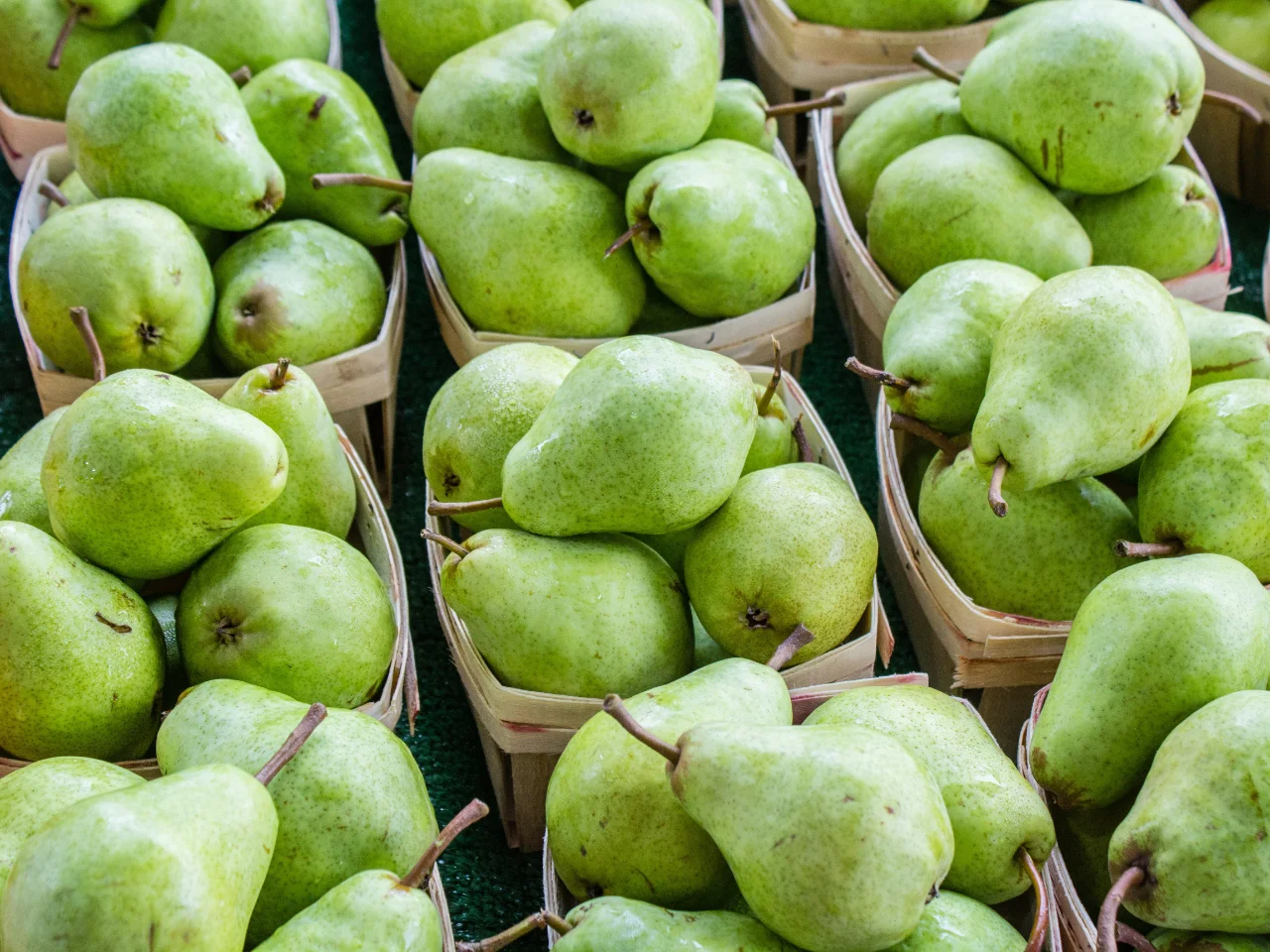
Yes, they can. Pear isn't toxic to dogs, and the American Kennel Club lists it as a fruit dogs can eat in moderation. Most dogs will gladly crunch through a few pieces.
Where it goes wrong:
- The seeds: Like apple pips, pear seeds contain cyanogenic compounds.
- The core and stem: Both are hard, fibrous, and easy for a dog to swallow whole.
- Too much at once: A whole pear is a lot of sugar and fibre for a small dog, and the usual result is loose stool.
Cut those out, keep the portion small, and pear is a pretty easy treat to share.
Are pears safe for puppies?
Puppies can try pear once they're on solid food. Give them one small cube, then check the next day's poop, since puppy guts react to new foods fast. Dogs with diabetes or a touchy stomach should go slower too, because pears do have natural sugar.
Nutritional Benefits of Pears for Dogs
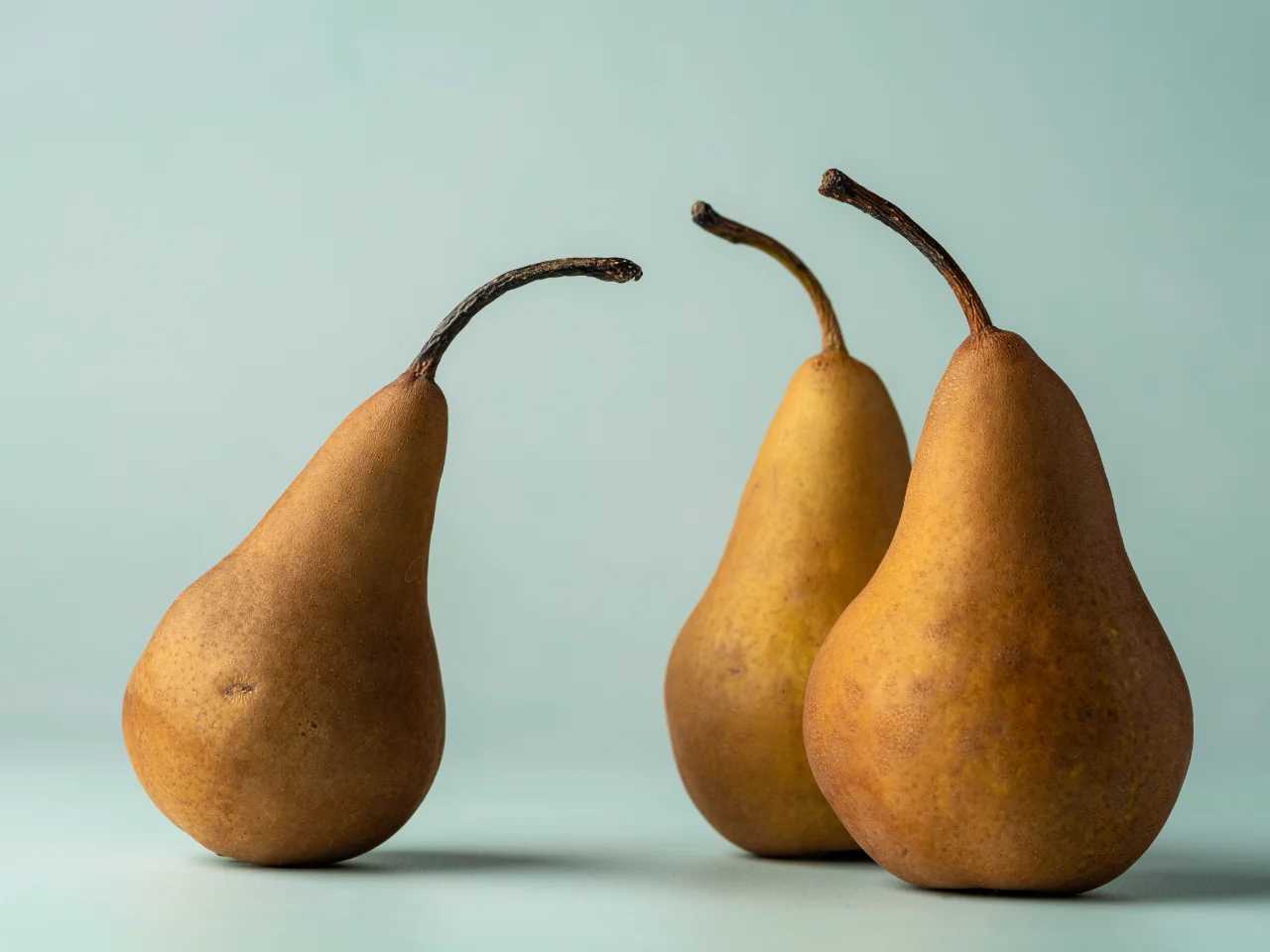
A dog on a complete diet doesn't need fruit. Still, pears bring a few useful things along with the flavour, which is why many pet parents swap them in for processed biscuits.
- Fibre: A medium pear has a good amount of soluble and insoluble fibre, which can support regular digestion and help some dogs feel full.
- Vitamins C and K: Vitamin C works as an antioxidant that backs up the immune system, and vitamin K plays a role in normal blood clotting.
- Potassium and copper: Both minerals support muscle, nerve, and heart function.
- Antioxidants: Pear skin contains plant compounds that may help reduce oxidative stress, which is cell wear and tear caused by unstable molecules.
- High water content: Pears are mostly water, so they're a light, hydrating snack after a long fall walk.
Those health benefits of pears are real but modest at treat-sized portions. The main win is that a pear slice is a healthy treat that beats a high-calorie store biscuit. If you're looking at homemade dog food recipes that include fruit, talk to your vet first, since home-cooked diets are easy to get unbalanced.
The Risks: Pear Seeds, Core, and Canned Pears
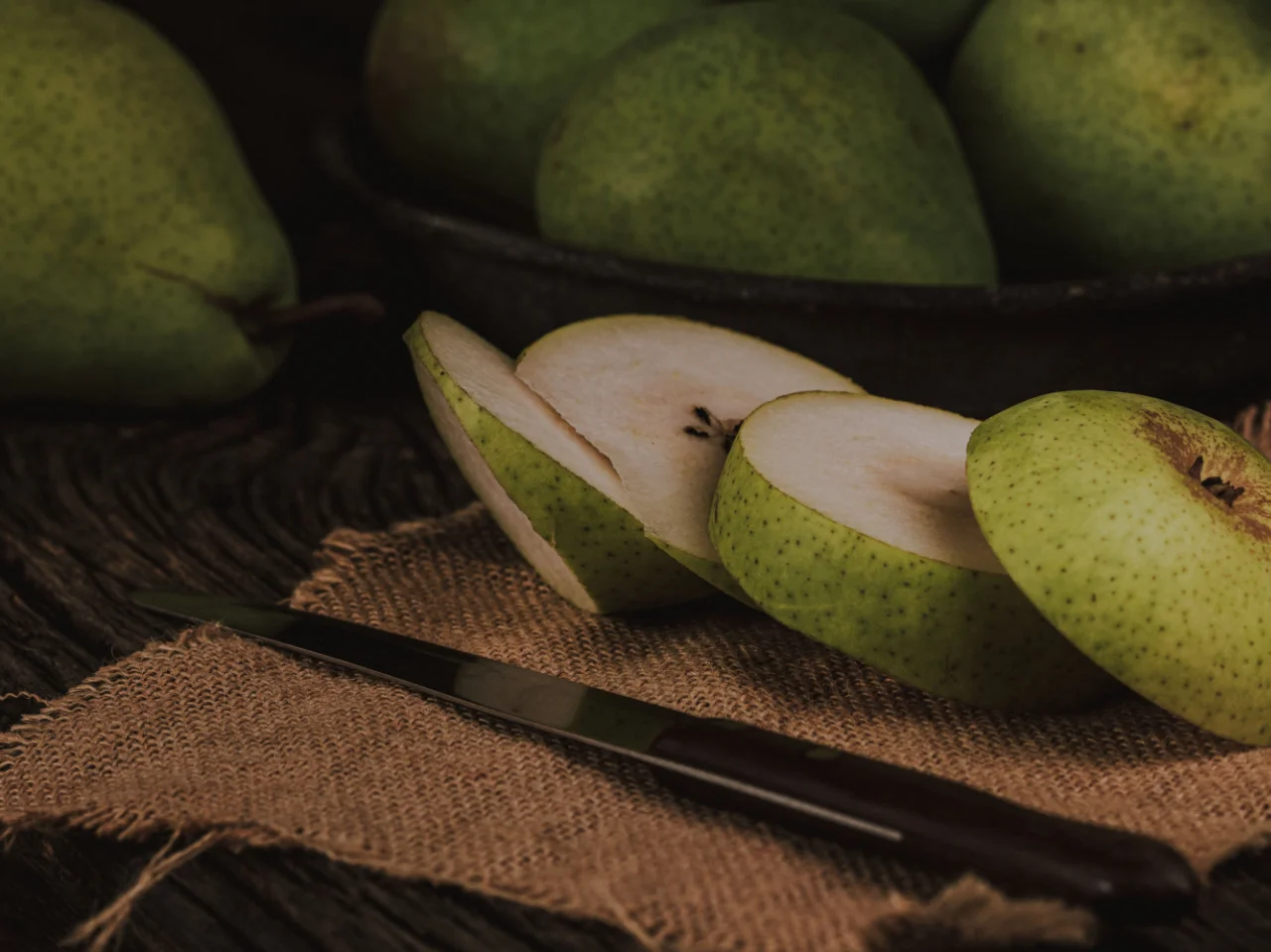
Most problems come from the parts people toss into the compost.
Pear seeds and cyanide
Pear seeds contain amygdalin, a cyanogenic glycoside that can release cyanide when the seed is crushed and digested. A dog would usually need to chew a lot of seeds for this to cause poisoning, and a few swallowed whole often pass without harm. Still, there's no reason to take the chance.
The core and stem
A pear core is dense and slippery. Dogs who gulp their food can choke on it, and a core that makes it down can get stuck in the stomach or intestines. Signs of a blockage include repeated vomiting, refusing food, a tender belly, and straining without passing stool.
Canned pears and pear desserts
Canned pears are a no from us. Most come in syrup, and the "light" kind sometimes uses sweetener in place of sugar, which isn't better. Pear pie and crisp have the same problem, plus butter and nutmeg. Watch for xylitol in particular. It's in some sugar-free baked goods, it can drop a dog's blood sugar within an hour, and even a small amount is worth a call to your vet. Our guide on xylitol poisoning in dogs has more.
Too much, too fast
Fruit allergies are rare in dogs. Far more often, a dog eats large quantities and ends up with an upset stomach, gas, or diarrhea.
How to Prepare and Serve Pears to Your Dog
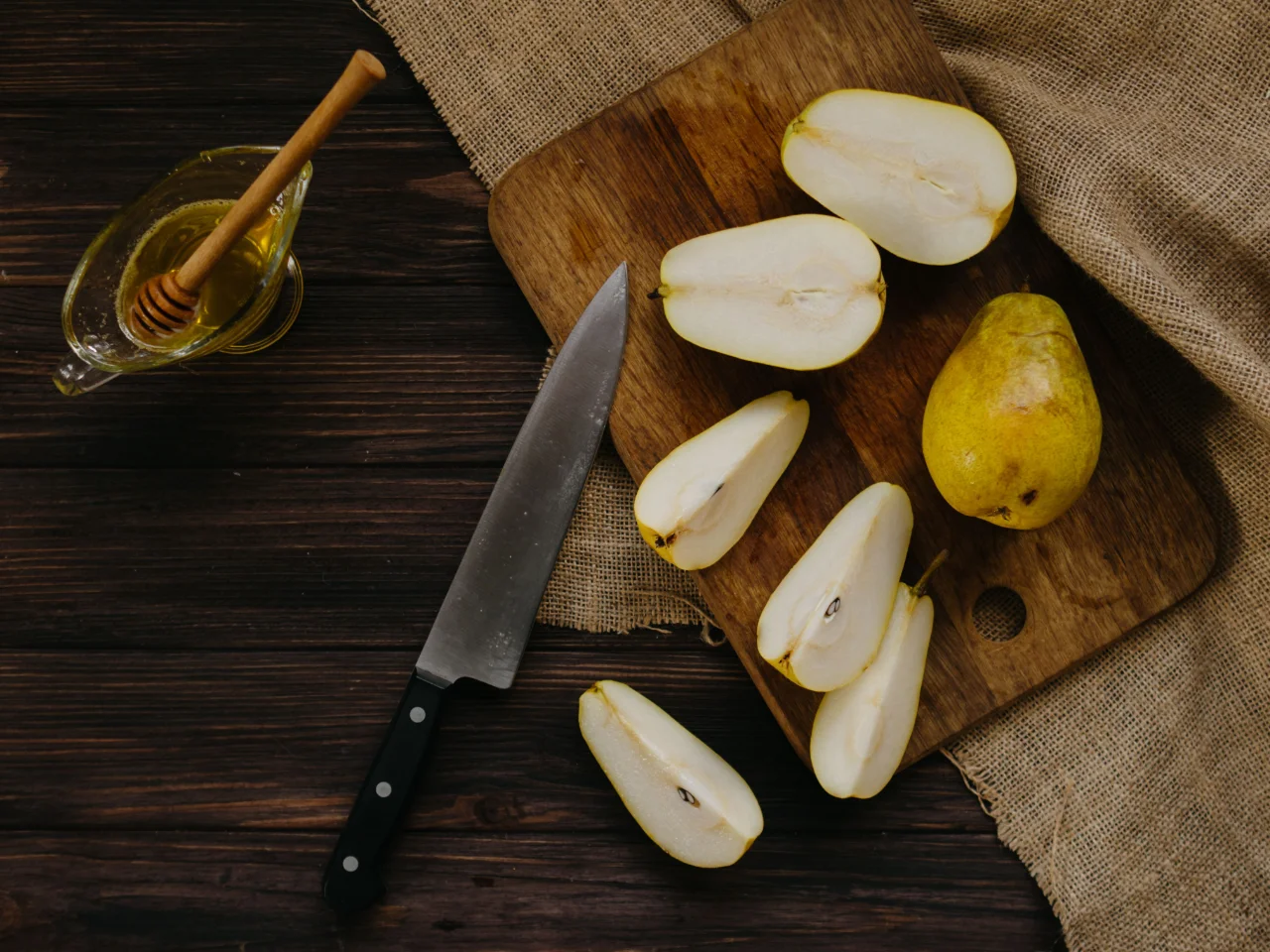
Getting pears ready takes about a minute:
- Choose a fresh, ripe pear that gives slightly near the stem.
- Wash it under running water to remove dirt and residue.
- Cut the pear into quarters and remove the core, stem, and every seed.
- Slice the flesh into small, bite-sized pieces. For small breeds, think pea- to grape-sized cubes.
- Offer one or two pieces the first time, then wait 24 hours to see how your dog's stomach handles it.
How much pear can a dog eat?
Moderation is key, since the sugar content adds up fast. Follow the 10% rule: treats of any kind should make up no more than about 10% of your dog's daily calories. In practice, that might mean one thin slice for a toy breed, two or three slices for a medium dog, and a quarter of a pear for a large dog. If your dog is overweight, cut those amounts down.
Frozen pear cubes make a cool, crunchy chew, and tiny diced pieces work well as training rewards. You can also mix pear with a few blueberries or a strawberry for variety.
Introducing any new food slowly is the safest approach. Our guide on how to transition dog food explains why gradual changes are easier on the gut.
Other Fall Harvest Fruits That Are Safe (and Unsafe) for Dogs
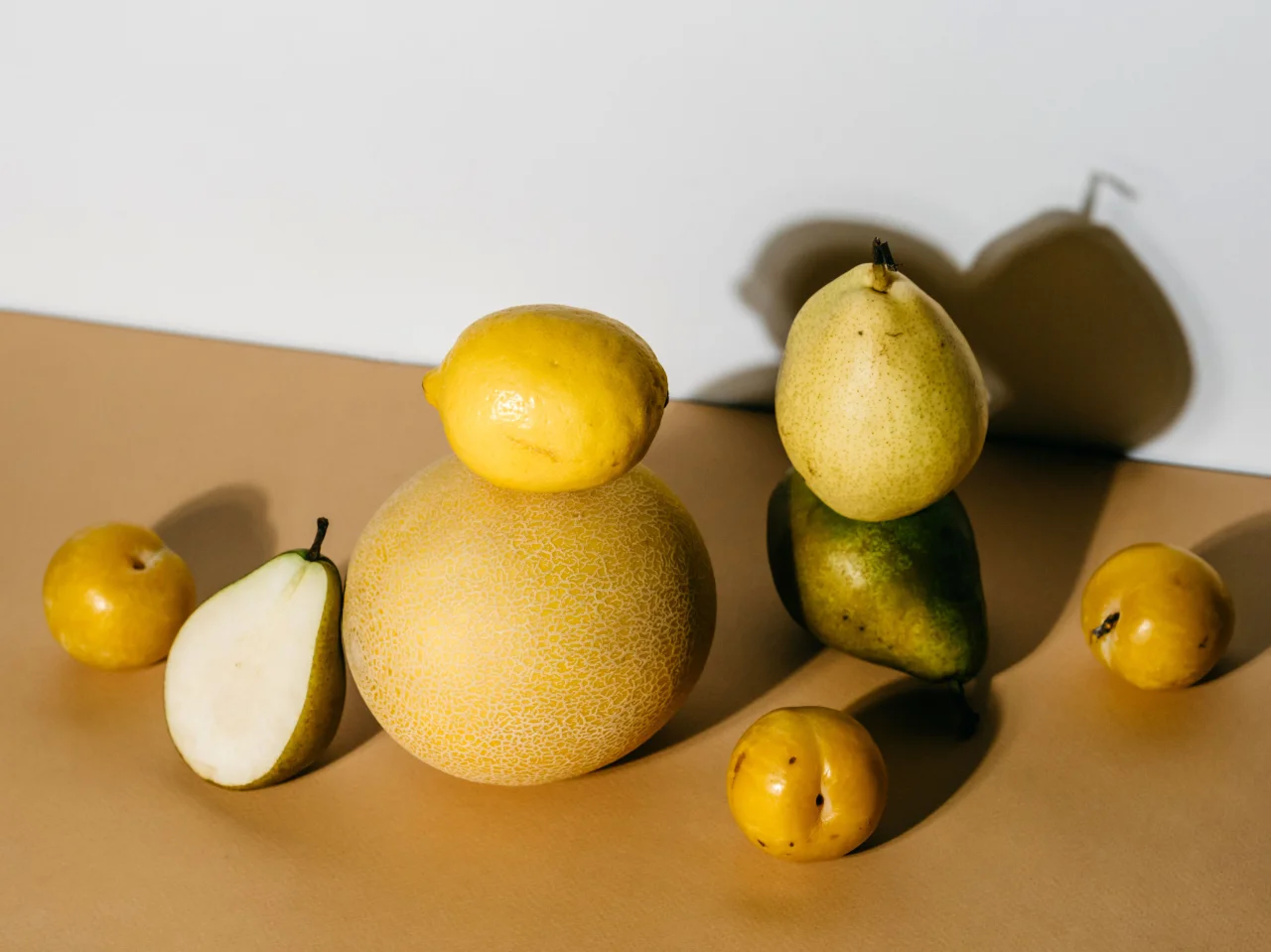
Ontario's harvest brings a lot of produce into the kitchen at once. Here's what you can share and what to keep away.
Safe in moderation
- Apples: Remove the core and pips, then serve thin slices.
- Blueberries and cranberries: Fresh and plain are fine. Learn more in our post on whether dogs can eat blueberries.
- Raspberries: A few at a time. See our guide on raspberries for dogs.
- Plain pumpkin: Cooked or canned pure pumpkin, not pie filling.
Keep out of reach
- Grapes and raisins: Even small amounts may cause kidney damage in some dogs.
- Plums and peaches: The flesh is fine, but the pits can block the gut and contain cyanogenic compounds. Read more about plums and dogs.
- Cherries: The pits, stems, and leaves are the problem. Here's why cherry pits are dangerous for dogs.
- Fallen, rotting fruit: Fermenting fruit in the yard can grow mould and produce alcohol.
For a longer list, see our full guide on what fruits dogs can eat. With Thanksgiving and the holidays coming up, our post on holiday foods to avoid for pets is worth a look too.
When to Call Your Vet After Your Dog Eats Pears

A couple of plain slices rarely cause trouble. Call your vet if:
- Your dog swallowed a whole core or a whole pear: Especially in small dogs, this can lead to choking or a blockage.
- They ate a large number of seeds: Your vet can decide whether monitoring is enough.
- Vomiting or diarrhea lasts more than 24 hours: Ongoing GI upset can lead to dehydration.
- They ate a pear product with xylitol, raisins, or alcohol: These need urgent attention.
- You notice red flags: Trouble breathing, bright red gums, weakness, a swollen belly, or collapse.
If any of these happen, don't wait for symptoms to get worse, and don't induce vomiting unless a vet tells you to. Contact your veterinarian or our emergency team right away.
A routine wellness exam is a great time to ask about treats that fit your dog's age, weight, and health needs.
Final Thoughts
Pears are one of the easier fruits to share with your dog. The ripe flesh is safe, low in fat, and packed with fibre and vitamins, so a few small pieces make a better reward than most packaged snacks.
The parts to watch are the seeds, core, and stem, along with canned or baked pear products. Serve fresh pear in small, seed-free pieces, keep portions within the 10% rule, and call your vet if your dog eats a whole core or shows vomiting, diarrhea, or signs of a blockage.
Fall harvest season is a good reminder to keep fruit bowls and compost bins out of reach. If you have questions about a snack your dog shouldn't have had, contact us.
Frequently Asked Questions
Can dogs eat pear skin?
Yes. Pear skin is safe for dogs as long as the fruit is washed well.
- Fibre: The skin holds much of the pear's fibre and antioxidants.
- Wash first: Rinsing removes dirt and pesticide residue.
- Small dogs: Peeled pear is easier to chew.
- Sensitive stomachs: Some dogs digest peeled pear better.
- Organic option: Still wash organic pears.
Can dogs eat Asian pears?
Yes. Asian pears are safe for dogs with the same precautions as regular pears.
- Core and seeds: Remove them every time.
- Texture: They're crisp and firm, so cut them smaller.
- Water content: Very juicy and hydrating.
- Sugar: Similar to other pears.
- Skin: Thin and fine to eat once washed.
Is it okay to give my dog pears every day?
A slice here and there is fine. Every day isn't necessary, and for small dogs it adds up.
- 10% rule: Treats of every kind share about 10% of daily calories.
- Weight: A daily slice matters more for a 5 kg dog than a 40 kg one.
- Variety: Swap in blueberries or apple on some days.
- Digestion: Daily extra fibre can make stool softer.
- Vet check: Dogs with diabetes or pancreatitis should get a vet's OK first.
Can dogs drink pear juice?
Not really worth it. Juice keeps the sugar and loses most of the fibre.
- Sugar load: Even 100% juice is concentrated fruit sugar.
- Additives: Some blends are partly grape juice, which you want to avoid.
- Digestive upset: Juice tends to cause loose stool.
- Better choice: Plain water, plus an actual slice of pear if you like.
- Xylitol check: "Sugar-free" or "no sugar added" drinks need a label check.
What should I do if my dog ate a pear core?
Stay calm and watch your dog closely for the next 24 to 48 hours.
- Size matters: Small dogs are at higher risk of a blockage.
- Choking signs: Gagging, pawing at the mouth, or trouble breathing need immediate help.
- Blockage signs: Repeated vomiting, no appetite, or belly pain need a vet visit.
- Don't induce vomiting: Only do this if a vet tells you to.
- Call ahead: Your vet can say whether to monitor or come in.

