

TL;DR: Xylitol Poisoning in Dogs: Symptoms, Causes, and Veterinary Care
- Xylitol is a sugar substitute that can be toxic to dogs.
- It can cause a sudden insulin release and low blood sugar.
- Severe cases can also damage the liver.
- Xylitol can be found in gum, candy, peanut butter, and toothpaste.
- Some medicines, vitamins, and supplements may contain it too.
- Checking the label can help prevent accidental exposure.
- Early signs can include vomiting, weakness, shaking, and stumbling.
- Severe hypoglycemia can lead to seizures, collapse, or loss of consciousness.
- Liver problems may cause poor appetite, vomiting, jaundice, or unusual bleeding.
- Signs can develop within hours of xylitol ingestion.
- Liver problems may show up later in some cases.
- A dog can look completely fine shortly after eating xylitol.
- That is why waiting for symptoms is not a good idea.
- Keep the product packaging if your dog may have eaten xylitol.
- The amount eaten and time of exposure can help the vet assess the situation.
- Do not induce vomiting unless a veterinary professional tells you to.
- Veterinary care may be needed after a suspected exposure.
- Severe cases may involve acute hepatic failure and coagulopathy.
- The outcome depends on the amount involved and the dog's condition.
If your dog may have eaten xylitol, it can be hard to know how serious the exposure is just by looking at them. Contact us; our professional vets can help assess the exposure and guide you on what to do next.
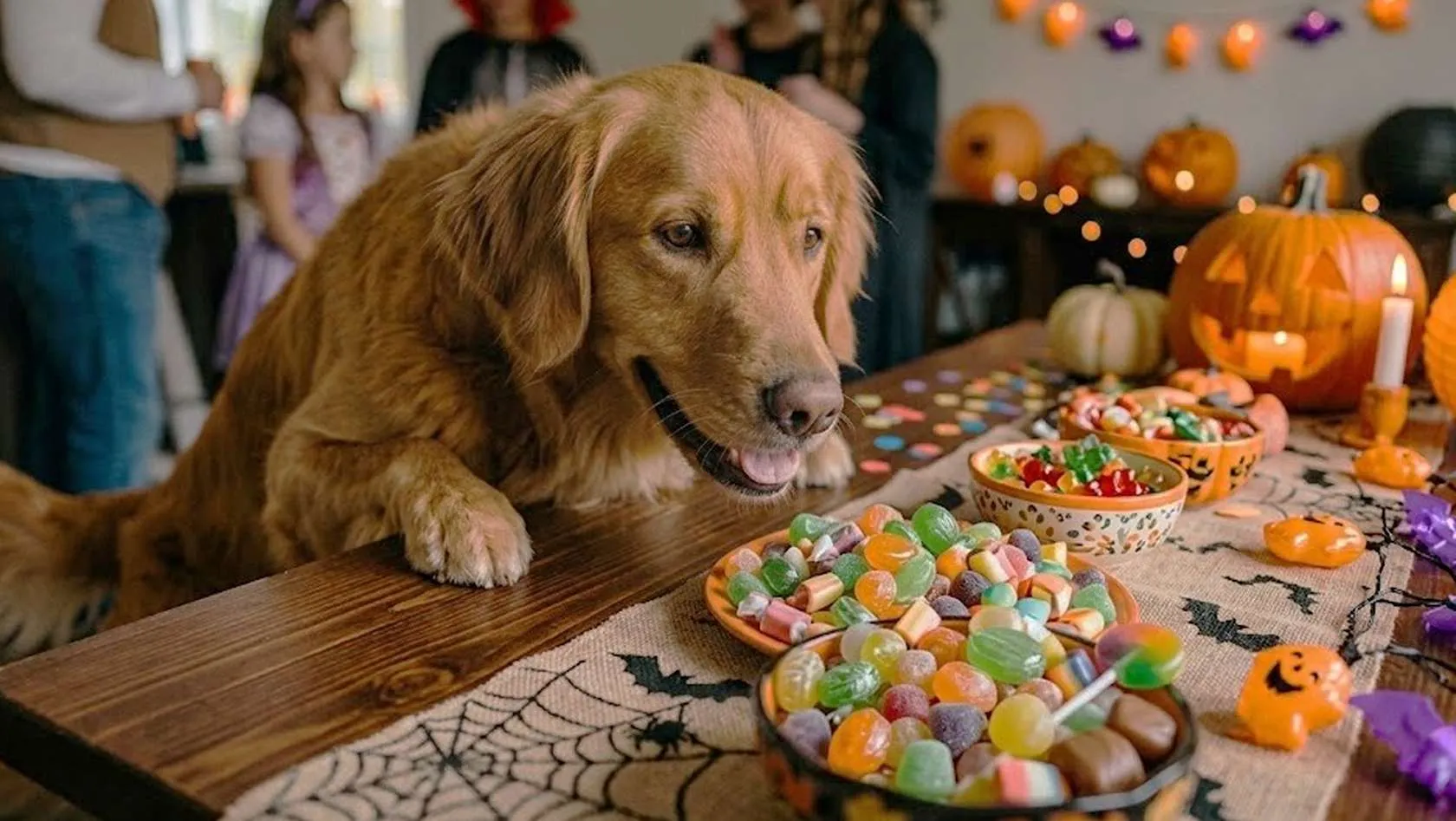
Could Halloween candy be more dangerous for your dog than it looks? Xylitol poisoning in dogs can happen when a dog gets into a product that contains xylitol, a sugar substitute used in many sugar-free products. It is easy to overlook something like this when there are treats, candies, and other goodies sitting around the house.
Xylitol is a sugar alcohol that people may come across in everyday products, but many dog owners do not realize how often it can show up in things outside of candy. Some products may contain xylitol without it being the first thing that comes to mind, which can make accidental xylitol ingestion in dogs hard to anticipate. A curious dog that gets into the wrong product can turn an ordinary moment into a worrying one.
If your dog has eaten a product containing xylitol, it is worth knowing what you are dealing with before brushing it off as just another stolen treat. Read on to learn more about xylitol toxicity in dogs, where xylitol may be found, and why this ingredient deserves attention around Halloween.
What Is Xylitol and Why Is It Toxic to Dogs

Xylitol is a sugar alcohol used as a sugar substitute in many products made for people. It has a low glycemic index, so xylitol causes little change in blood sugar in humans compared with regular sugar. Xylitol is used in things like sugar-free gum, candy, toothpaste, baked goods, and other xylitol-containing products, and xylitol can also be found in products you might not think to check.
The problem starts when a dog gets into one of these products. Xylitol in dogs can trigger a strong insulin release even when the dog's blood sugar is normal, causing blood sugar to drop quickly. While xylitol has a wide margin of safety for people, dogs can have a much more serious reaction because of the way their bodies handle xylitol.
How Xylitol Affects Dogs
The biggest immediate concern when a dog ingests xylitol is what happens to insulin and blood sugar. Xylitol is rapidly absorbed after it is swallowed, and xylitol stimulates the pancreas to release insulin. That sudden insulin release can cause low blood sugar, which is why hypoglycemia in dogs is such a major concern after xylitol consumption.
- It can cause a sudden insulin release: When a dog ingests xylitol, the pancreas may release a large amount of insulin even though the dog's blood sugar does not need to come down.
- Blood sugar can fall quickly: That extra insulin can cause low blood sugar, sometimes within a relatively short time after exposure.
- Low blood sugar can look frightening: A dog may become weak, sleepy, wobbly, shaky, or confused. If hypoglycemia becomes severe, seizures or collapse can occur.
- Doses of xylitol matter: The amount a dog consumes can affect how serious the reaction becomes. Larger doses of xylitol can bring a greater risk of complications.
- Dogs process xylitol differently: Xylitol metabolism in dogs is very different from how people process it, which helps explain why something used as a sugar substitute can be dangerous to dogs.
- The liver may be affected too. Some exposures can cause liver injury, which may be seen through changes in liver enzyme levels or other enzyme levels.
- Severe liver damage can happen. In serious cases, reactive oxygen species and oxidative stress may contribute to damage in liver cells. This can progress to hepatic necrosis, meaning parts of the liver tissue die.
- Research has documented these effects: Findings from cases such as xylitol ingestion in eight dogs have helped show that xylitol exposure can cause both hypoglycemia and liver problems.
So, there can be more going on than a simple stomach upset. A dog may first have problems because of the sudden insulin release and falling blood sugar, while a more serious exposure can also affect the liver. That is why the amount of xylitol involved matters so much.
Why Xylitol Is Toxic to Dogs
The reason xylitol is toxic to dogs comes down to how differently their bodies respond to it. People can use xylitol as a substitute for sugar because it has a low glycemic index and xylitol causes little change in blood sugar. In dogs, however, xylitol stimulates a much stronger insulin response, and that can send blood sugar crashing.
A few things make xylitol especially concerning:
- It causes an unusual insulin response: Xylitol stimulates insulin release in dogs even when their blood sugar is not high. The extra insulin can quickly push blood sugar too low.
- It is absorbed quickly: Xylitol is rapidly absorbed after ingestion, so the effects can start sooner than an owner might expect.
- Hypoglycemia can become serious: Low blood sugar can affect the brain and nervous system, causing weakness, poor coordination, tremors, seizures, and collapse.
- It can affect the liver as well: Depending on the exposure and doses of xylitol involved, liver injury may occur. Changes in liver enzymes can be a sign that the liver has been affected.
- Severe liver injury can involve hepatic necrosis: Reactive oxygen species and oxidative stress may play a role in serious liver damage, which can result in hepatic necrosis and potentially liver failure.
- It can be hiding in everyday products: Xylitol can be found in gum, candy, toothpaste, baked goods, and other products containing xylitol. This gives dogs more opportunities for accidental exposure to xylitol when they get into something meant for people.
- Dogs should not be treated like small people when it comes to xylitol: Dogs and cats can respond differently to substances, and the fact that xylitol is used as a sugar substitute does not mean a xylitol-containing product is safe for pets.
- Veterinary evidence has shown the risk: The Centre for Veterinary Medicine (CVM) has addressed xylitol exposure in dogs, and xylitol has been shown to cause serious effects in exposed animals. Cases involving hunting dog hypoglycemia have also helped illustrate how dangerous severe low blood sugar can be.
It can be easy to think that a common sugar substitute could not be that dangerous. Unfortunately, xylitol is one of those ingredients where that assumption can cause a real problem. When a dog ingests xylitol, the sudden insulin release can lead to dangerously low blood sugar, and some exposures can also cause serious liver damage.
Xylitol can also be found in products around the house, so accidental exposure is possible even when nobody intentionally gives it to a dog. Checking the ingredient list and keeping xylitol-containing products out of reach can help prevent an exposure in the first place.
Common Products Containing Xylitol

Xylitol can turn up in more places than many dog owners might expect. It is used in some foods, personal care items, and other products, so it is worth checking the ingredients instead of relying only on the front of the package. A quick label check can be especially helpful when bringing new products into a home with dogs.
Foods That May Contain Xylitol
Xylitol can be used as a sweetener in certain foods, especially products made with little or no added sugar. Some products that may contain xylitol include:
- Xylitol gum and some sugar-free gum
- Certain peanut butter and other nut butters
- Some baked goods and desserts
- Sugar-free candies and mints
- Certain sweet spreads
- Some drinks and nutrition products
Non-Food Products That May Contain Xylitol
It can be surprising to find xylitol outside the kitchen, but xylitol is also used in some everyday personal care products and medicines. These products may be easy to overlook when thinking about things that a dog could get into.
- Toothpaste
- Mouthwash
- Chewable vitamins
- Some supplements
- Certain medicines
- Other oral care products
Why Checking the Label Helps
A product may contain xylitol without making it obvious on the front of the package. Checking the ingredient list is a simple way to see whether xylitol is present, especially with sugar-free foods, gum, toothpaste, and similar products.
Ingredients can change when manufacturers update a formula, so even familiar products are worth checking from time to time. Keeping xylitol-containing products out of a dog's reach can help prevent accidental access.
What to Know and What to Do If Your Dog Ingests Xylitol

Finding out that a dog has consumed something that may contain xylitol can be stressful, especially when it is not clear how much was eaten. The product, amount involved, and timing can all matter when the exposure is assessed. Having a few basic details ready can make it much easier to explain what happened to a veterinary professional.
What to Know About the Ingestion
Before calling, try to gather whatever information is available about the product and what happened. Not every detail will be known, but even a rough estimate can help the veterinary team understand the situation.
- The product name and type
- The ingredient list and whether xylitol is present
- The amount of product the dog may have eaten
- The estimated xylitol dose, if available
- When the dog may have consumed it
- The dog's approximate weight
- The dog's age
- Whether any wrappers, containers, or other packaging were eaten
- Whether other products were consumed at the same time
- Whether someone actually saw the dog eat the product
- Whether more than one xylitol-containing product could be involved
- The original packaging or label, if it is still available
Avoid Waiting for Problems to Appear
A dog may seem completely fine after an ingestion, which can make the situation feel less urgent. Still, looking normal does not tell you whether the exposure needs professional attention.
- Do not assume the dog is fine because it looks normal.
- Do not wait for signs of xylitol poisoning before asking for advice.
- Keep track of how much time has passed since the possible ingestion.
- Keep an eye on the dog while arranging professional guidance.
- Make a note of any changes that occur.
- Tell the veterinary professional if vomiting or other concerning changes develop.
- Do not assume that a small amount is harmless without professional advice.
What to Do After Xylitol Ingestion
If there is a reasonable chance that a dog has consumed xylitol, contact a veterinarian or animal poison control centre for guidance. It can be tempting to try to figure things out at home, but professional advice is the better option when the exact exposure is uncertain.
- Take the remaining product away from the dog.
- Keep the original package, container, or label.
- Have the ingredient list ready.
- Give the product name to the veterinary professional.
- Provide the estimated amount consumed.
- Tell them when the ingestion may have happened.
- Give the dog's approximate weight and age.
- Mention whether any packaging was swallowed.
- Mention whether other products were eaten.
- Follow the instructions given by the veterinary professional.
- Do not give home remedies unless specifically instructed.
- Do not induce vomiting unless a veterinary professional tells you to do so.
- Report any concerning changes that develop.
- Bring the product or its packaging if the dog needs to be examined.
When something like this happens, having the right information and getting professional guidance can take some of the guesswork out of a worrying situation.
Clinical Signs of Xylitol Toxicity in Dogs
The clinical signs associated with xylitol can vary from one dog to another. After ingestion of xylitol, some dogs may show changes within hours, while other problems can take longer to become noticeable. It can be worrying when a dog suddenly seems different, especially when there has already been a known or suspected exposure.
Signs That May Appear Early
Xylitol poisoning in dogs includes vomiting along with changes in their energy, movement, or awareness. At first, these changes might seem minor or look like something unrelated, particularly if the dog was acting normally earlier.
- Vomiting
- Weakness
- Unusual tiredness
- Sleepiness
- Shaking or trembling
- Stumbling
- Unsteady movement
- Difficulty standing
- Reduced alertness
- Sudden loss of energy
- Collapse
Signs Associated With More Severe Hypoglycemia
Xylitol can cause a sudden drop in blood glucose, and dogs that develop hypoglycemia may become noticeably weak or unsteady. As the problem becomes more serious, changes in movement, awareness, and responsiveness can become harder to miss.
- Marked weakness
- Tremors
- Poor coordination
- Confusion
- Difficulty walking
- Difficulty standing
- Reduced responsiveness
- Seizures
- Collapse
- Loss of consciousness
Signs of Liver Problems
Some cases of xylitol toxicosis may involve liver failure in dogs, with related signs appearing later than the initial changes. Dogs that develop serious liver problems may show additional changes that are quite different from the earlier signs.
- Loss of appetite
- Continued vomiting
- Increasing weakness
- Severe tiredness
- Yellowing of the eyes, gums, or skin
- Unusual bruising
- Unusual bleeding
- Blood in vomit or stool
- Dark-colored urine
- Changes in behaviour or awareness
- Collapse
When Signs May Appear
The timing is not the same for every dog, which can make a suspected exposure especially difficult to judge. Signs related to low blood glucose may occur within hours of ingestion, while liver problems can sometimes become noticeable later, including around 12 to 24 hours after xylitol ingestion.
A dog may look fine shortly after eating something containing xylitol and still develop problems later. That is why the dog's appearance immediately after an exposure does not always tell the whole story.
When Veterinary Care May Be Needed for Xylitol Poisoning in Dogs

When a dog has been exposed to xylitol, it can be hard to know whether the situation needs immediate attention or close monitoring. Veterinary medicine looks at the details of each exposure rather than treating every case the same way. Getting professional advice can give dog owners a clearer idea of what needs to happen next.
When Professional Advice Is Appropriate
If there is a known or suspected exposure, contacting a veterinarian is a sensible step, even when the dog seems fine. It is much easier for the veterinary team to assess the situation when there is some information about what happened.
- A dog has consumed a product known to contain xylitol.
- The amount consumed is unknown.
- The amount of xylitol in the product is unclear.
- The dog may have been exposed to more than one xylitol-containing product.
- The time of exposure is uncertain.
- The product label is missing or unavailable.
- The dog has already developed concerning changes.
- The veterinarian recommends an examination or monitoring.
What a Veterinarian May Consider
Xylitol varies between products, so the details of the exposure matter. A veterinarian can look at the individual situation instead of making assumptions based only on the type of product involved.
- The specific product containing xylitol
- The estimated amount consumed
- The xylitol concentration, if available
- The dog's body weight
- The time since exposure
- Other ingredients in the product
- The dog's medical history
- Changes noticed since the exposure
- Whether further testing or monitoring may be needed
When the Situation May Be More Serious
Some cases of xylitol poisoning can be associated with liver complications. In severe cases, acute hepatic failure and coagulopathy have been reported, so a dog with a significant exposure may need closer veterinary attention.
- Liver injury can become a concern in some exposures.
- Dogs that develop serious liver damage may progress to liver failure.
- Severe liver injury can interfere with normal blood clotting.
- Acute hepatic failure and coagulopathy can occur in serious cases.
- Further veterinary assessment may be needed when liver problems are suspected.
Getting the Right Help
When something like this happens, it is understandable to feel unsure about what to do first. A veterinarian or animal poison control centre can help assess the exposure using the information available.
- Keep the original product or packaging.
- Provide the product name and ingredient list.
- Give the estimated amount consumed.
- Explain when the exposure may have happened.
- Mention any other products the dog may have eaten.
- Tell the veterinary team about any changes noticed.
- Follow the instructions provided by the veterinary professional.
- Seek further care if the veterinarian recommends it.
The important thing is to avoid trying to judge the seriousness of an exposure based only on how the dog looks. Professional guidance can help take some of the guesswork out of a stressful situation.
Final Thoughts
Xylitol poisoning in dogs can happen at any time when a dog gets into something it should not eat. Halloween candies and treats deserve extra attention, especially sugar-free products that may contain xylitol.
The effects can range from low blood sugar and seizures to serious liver damage in severe cases. Since a dog can seem perfectly fine at first, it is easy to think everything is okay when it may not be.
Keeping Halloween candy and other xylitol-containing products out of reach can help prevent a scary situation. If your dog may have eaten xylitol, contact a veterinary professional as soon as possible for advice on what to do next.
Frequently Asked Questions
Can Halloween candy wrappers be a problem for dogs even if the candy does not contain xylitol?
Yes. A dog that gets into Halloween candy may swallow the wrapper along with the treat, which can create a separate problem. It is easy to overlook the packaging when cleaning up after Halloween, especially if a dog has already gotten into the candy.
Wrappers can be swallowed: Packaging may become stuck or cause an intestinal blockage.
Candy residue can remain: Even an empty wrapper may still have bits of candy or other ingredients on it.
More than one problem is possible: A dog may eat both the candy and its wrapper during the same incident.
The packaging can help: Keeping the wrapper or package can help identify exactly what the dog got into.
Secure the candy and trash: Keeping both treats and discarded wrappers out of reach can prevent these accidents.
Are sugar-free Halloween candies always made with xylitol?
No. Sugar-free candies can use different sweeteners, so seeing "sugar-free" on the package does not automatically mean it contains xylitol. Checking the ingredient list is the best way to know what is actually in the candy.
Sweeteners vary: Different sugar-free products can use different ingredients.
Check the label: Look specifically for xylitol in the ingredient list.
Formulas can change: A familiar candy may have different ingredients after a product update.
Keep the package: The original packaging can make it easier to identify the ingredients if a dog gets into the candy.
Ask when unsure: A veterinary professional can help when the ingredients or exposure are unclear.
Can a dog come into contact with xylitol without eating candy?
Yes. Xylitol can also be found in everyday products that have nothing to do with candy. That can make an unexpected exposure easier to miss around the house.
Look outside the kitchen: Some toothpaste, mouthwash, supplements, and medicines may contain xylitol.
Check new products: Reading labels can help spot xylitol-containing products before bringing them into areas a dog can reach.
Watch bathroom items: Some personal care products may be left where a curious dog can get to them.
Think beyond food: Not every xylitol-containing product looks or smells like something a dog would want to eat.
Store products securely: Closed cabinets and other secure storage can help prevent accidental access.
Can it be difficult to know how much xylitol a dog has consumed?
Yes. Figuring out the exact amount can be tricky, especially when a dog has eaten part of a product or several items. This is one reason keeping the original packaging can be so helpful.
Product amounts differ: Different products can contain different amounts of xylitol.
Part of a product may be missing: It may be difficult to tell how much was actually eaten.
Several products may be involved: A dog could get into more than one xylitol-containing item.
The label can provide clues: Ingredient and product information can help with the exposure assessment.
Professional advice can help: A veterinarian or animal poison control centre can help when the amount is uncertain.
Can two dogs have different reactions to the same xylitol-containing product?
Yes. Dogs do not necessarily respond to the same exposure in exactly the same way. It can be tempting to compare one dog's experience with another, but that does not reliably predict what will happen.
The amount consumed can differ: One dog may eat more of the product than another.
Body size can differ: The same amount can represent a different exposure for dogs of different sizes.
Individual factors matter: Each dog's circumstances can affect how the exposure is assessed.
Timing can be different: Signs may not appear at exactly the same time in every dog.
Each exposure matters: A previous exposure that caused few problems does not mean another exposure will be harmless.

