

TL;DR: Key Things to Know About Vomiting in Dogs and When to Worry
- Dogs can vomit for many reasons, from a simple upset stomach to a more serious health problem.
- Dog vomit may contain undigested food, bile, mucus, blood, grass, or other material.
- Common causes include diet changes, spoiled food, parasites, infections, pancreatitis, toxins, and swallowed objects.
- One mild episode may be nothing to worry about if your dog still seems comfortable and acts like themselves.
- Repeated vomiting, blood in the vomit, abdominal pain, weakness, or other unusual signs can mean your dog needs veterinary care.
- If your dog has swallowed a toxin or an object, contact a veterinarian instead of trying to induce vomiting yourself.
- For mild vomiting, your vet may recommend simple dietary changes and slowly returning to regular food.
- Treatment depends on the cause and may involve medication, fluids, dietary support, or other care.
- Vomiting that keeps coming back over weeks should be checked by a veterinarian.
Seeing your dog vomit can be scary, especially when you have no idea whether it is something minor or more serious. If the vomiting continues or your dog does not seem like themselves, contact us for guidance. Our professional veterinary team is here to check your dog, answer your questions, and provide the care they need.
Is your dog vomiting and you’re not sure whether you should be worried? Seeing your dog vomit can be upsetting, especially when you’re left wondering what’s normal and whether something more serious could be going on. Most dog owners have probably had that moment of staring at their dog’s vomit and wondering what to do next.
Dog vomiting can be acute or happen repeatedly, and it can be hard to know what it means just by looking at your dog. When a dog is vomiting, you may start thinking about the possible cause for concern and whether your pet needs to see a veterinarian. Knowing more about a dog’s vomiting can help you feel more prepared if it happens again.
If your dog is throwing up, it’s natural to want to know whether you should simply keep an eye on them or seek veterinary care. Read on to learn more about vomiting in dogs, what’s normal, and when it may be time to contact your vet.
What Does It Mean When a Dog Is Vomiting
Vomiting is your pet's way of emptying its stomach when something does not agree with it; it's normal. A healthy dog may vomit occasionally after eating spoiled food, chewing on too much grass, or getting into something unusual, and it can be hard not to worry when you see it happen. Still, vomiting may also happen because of gastrointestinal upset or a more serious underlying problem, so it helps to pay attention to what comes up and how your dog seems afterwards.
Vomiting vs. Regurgitation
Vomiting and regurgitation can look almost the same at first, but there is a difference between them. Vomiting usually involves nausea, retching, and abdominal contractions, while regurgitation tends to happen suddenly and with little effort.
- Vomiting: A dog may gag, retch, and use its abdominal muscles before bringing up stomach contents.
- Regurgitation: Food or liquid usually comes back up without much warning or forceful effort.
- Appearance: Vomit may contain partly digested food, while regurgitated food is often undigested.
- Timing: Regurgitation often happens soon after eating or drinking, while vomiting can happen at various times.
What Can Be in a Dog’s Vomit?
If you have ever had to clean up after a vomiting dog, you probably noticed that the contents can look very different from one episode to another. Dogs may vomit food, liquid, mucus, bile, or other material depending on what they have eaten and what is going on in their digestive system.
- Partly digested food: Food may look partly broken down after spending time in the stomach.
- Liquid or stomach fluid: Clear or watery fluid may come up during an episode.
- Yellow bile: Yellow vomit may contain bile from the digestive tract.
- Mucus: Mucus can sometimes be mixed in with the material being brought up.
- Blood: Blood in vomit may look bright red or appear darker, sometimes resembling coffee grounds.
Sometimes, a dog may bring up material that appears to have come from farther along the digestive tract. Facal-looking material or other unusual contents may happen if a dog has ingested something indigestible, but it can also be linked to serious conditions such as an intestinal blockage.
Vomiting does not always mean something is seriously wrong, but it is worth paying attention when it is accompanied by other symptoms. Lethargy, abdominal pain, vomiting and diarrhea, or blood in vomit can be signs that your dog needs veterinary attention.
Types of Dog Vomit and What They May Look Like
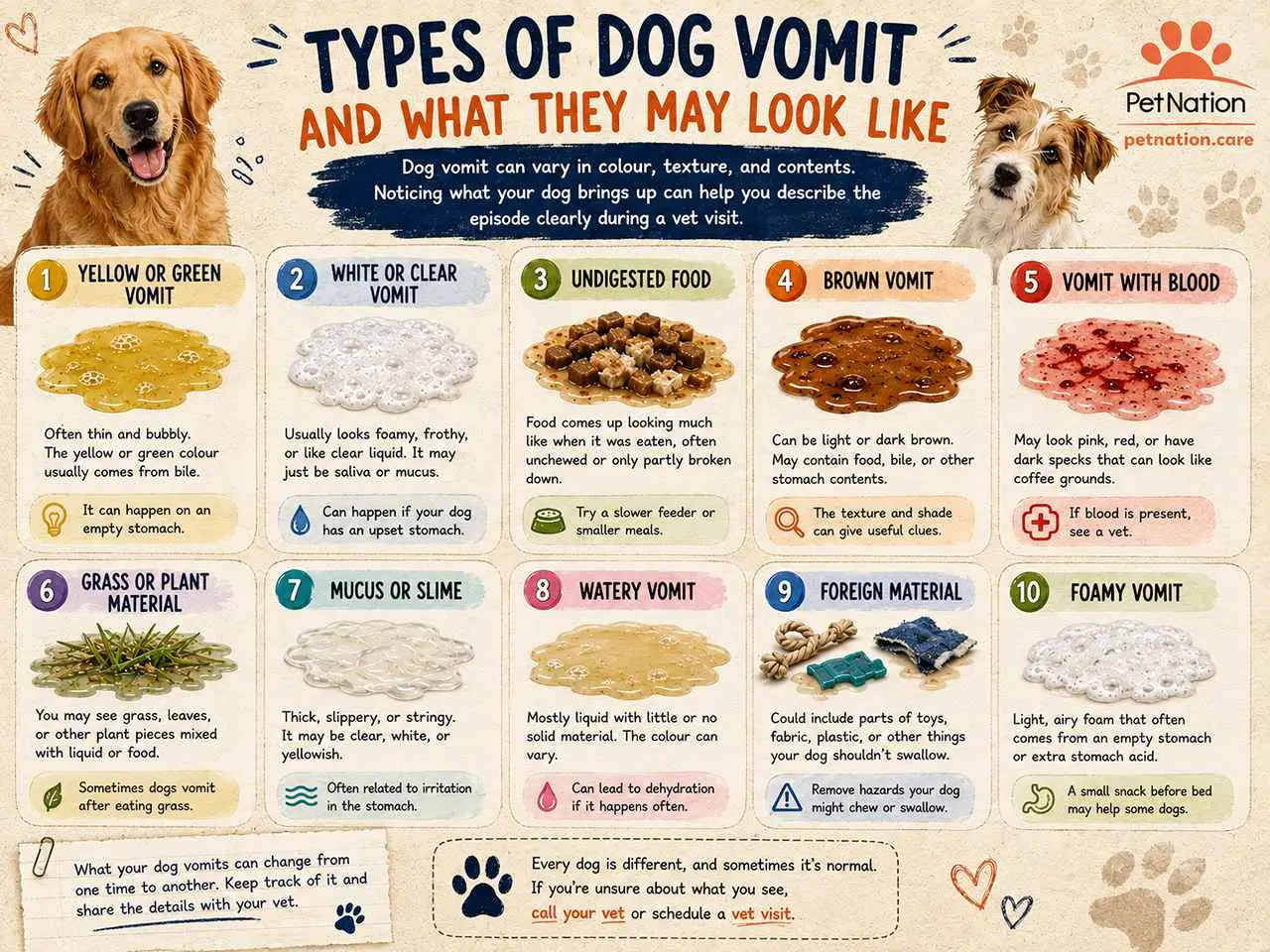
If you have ever had to clean up after a vomiting dog, you probably noticed that what comes up does not always look the same. Dog vomit can be watery, foamy, full of undigested food, or contain other material from the stomach. Taking a quick look at it can be useful if you later need to describe the episode during a vet visit.
Yellow or Green Vomit
Yellow or green vomit often contains bile and can range from a pale yellow to a deeper green. It may look different from one episode to another.
- Yellow liquid or foam
- Greenish fluid
- Thin, watery vomit
- Foamy material mixed with mucus
White or Clear Vomit
White or clear vomit can look more like foam or a slimy liquid than typical food-filled vomit. It may also contain a small amount of mucus.
- White foam
- Clear liquid
- Thick mucus
- Bubbly or frothy material
Undigested Food
Seeing undigested food in your dog's vomit can be surprising, especially when it still looks almost the same as the regular food you just gave them. The food may be whole or partly softened.
- Whole pieces of kibble
- Chunks of food
- Partially softened food
- Food mixed with liquid or mucus
Brown Vomit
Brown vomit can be light or dark and may contain food or other stomach contents. The colour can vary depending on what your dog has eaten.
- Light brown liquid
- Dark brown material
- Food mixed with stomach contents
- Dark, grainy material
Vomit Containing Blood
Blood can make vomit look pink, red, dark red, or brown. You may notice just a few streaks, or the blood may be mixed more evenly throughout the vomit.
- Bright red streaks
- Pink or reddish liquid
- Dark red material
- Brown material that resembles coffee grounds
Grass or Plant Material
If your dog likes chewing on grass or plants, you may notice pieces of them in the vomit. They can come up mixed with food, mucus, or stomach fluid.
- Pieces of grass
- Leaves
- Plant fibres
- Grass mixed with food or liquid
Mucus or Slimy Vomit
Mucus can give vomit a thick, stringy, or slippery appearance. It may be clear, white, yellowish, or mixed with other stomach contents.
- Clear strands
- Thick, slimy material
- White or yellowish mucus
- Mucus mixed with food or liquid
Watery Vomit
Sometimes there is little to no solid material, and the vomit is mostly liquid. It can be clear or take on the colour of bile, food, or other stomach contents.
- Clear liquid
- Yellow fluid
- Brown liquid
- Liquid with small pieces of food
Foreign Material in Vomit
Dogs can be curious and may swallow things that were never meant to be eaten. If something unusual comes up in the vomit, it may be a piece of an object or another type of indigestible material.
- Pieces of their toys
- Fabric or string
- Plastic or packaging
- Other non-food objects
Common Causes of Vomiting in Dogs

Dog vomiting can happen for many different reasons, from a temporary digestive upset to an underlying health condition. Sometimes the reason is fairly straightforward, while other cases may be linked to a problem that needs veterinary attention.
Dietary Changes and Digestive Upset
A dog's stomach may react to something new, unfamiliar, or difficult to digest. Even a healthy dog can develop an upset stomach after a sudden change in what they eat.
- Abrupt changes in diet
- Eating spoiled or contaminated food
- Eating rich or fatty foods
- Eating too much
- Food allergies or intolerances
Parasites and Infections
Parasites and infections can affect the digestive system and may lead to vomiting. Dogs can encounter these problems through contaminated food, water, soil, or other sources.
- Intestinal parasites
- Gastrointestinal infections
- Gastroenteritis
- Intestinal inflammation
Pancreatitis and Colitis
Conditions affecting different parts of the digestive system can also result in vomiting. Pancreatitis affects the pancreas, while colitis involves inflammation of the colon.
- Pancreatitis
- Colitis
- Inflammation within the digestive tract
- Other gastrointestinal disorders
Eating Plants or Non-Food Items
Dogs may eat grass, plants, or objects they find around the home or outdoors. Some materials can irritate the stomach, while objects that cannot be digested may cause problems as they move through the digestive tract.
- Grass and plant material
- Toys
- Socks or fabric
- Plastic
- String or other foreign objects
Poisons and Toxins
Certain substances can be harmful when swallowed and may cause vomiting. These can be found in everyday household products as well as some foods, plants, and medications.
- Poisons
- Toxic substances
- Certain human medications
- Toxic plants
- Household chemicals
Kidney Problems and Other Diseases
Vomiting is not always caused by a problem in the stomach. Diseases affecting other organs can also contribute to digestive symptoms.
- Kidney failure
- Liver disease
- Hormonal disorders
- Other systemic diseases
Cancer
Some types of cancer can affect the digestive system or other organs involved in digestion. Vomiting may occur as part of the broader illness.
- Tumours affecting the digestive tract
- Tumours affecting other organs
- Cancer-related digestive changes
Dehydration
Severe dehydration can affect how the body functions and may be associated with vomiting. It can also develop alongside other illnesses that cause fluid loss.
- Significant loss of body fluids
- Reduced water intake
- Fluid loss from illness
- Prolonged digestive upset
Bloat and Gastric Dilatation-Volvulus
Bloat, also known as gastric dilatation-volvulus (GDV), involves the stomach becoming distended and potentially twisting. It is a serious condition that requires urgent veterinary attention.
- Distended stomach
- Gas accumulation
- Stomach twisting
- Sudden digestive distress
When to Worry and Seek Emergency Vet Care
It can be hard to know when vomiting is something you can watch at home and when you need to get your dog to a vet right away. A single episode may not mean much, but things change when the vomiting keeps happening, or your dog starts acting unwell. If your dog is vomiting and shows other worrying signs, it is better to take those changes seriously.
Repeated or Persistent Vomiting
Repeated vomiting is more concerning than one episode of acute vomiting, especially if it keeps happening within a short time. If your dog cannot keep water down or seems to be getting weaker, immediate veterinary care may be needed.
- Vomiting several times in a short period
- Persistent vomiting that does not settle
- Unable to keep water down
- Repeated vomiting with weakness or unusual behaviour
Blood in the Vomit
Seeing blood in your dog’s vomit can be alarming, and it is not something to simply brush off. Blood may look bright red, dark red, or like small coffee-ground-like particles.
- Bright red blood
- Dark red material
- Coffee-ground-like material
- A noticeable amount of blood
Signs of Abdominal Pain
Dogs cannot tell us that their stomach hurts, so you may have to rely on changes in their behaviour. Vomiting accompanied by abdominal pain can be a sign of something more serious.
- A swollen or tense belly
- Whining or crying
- Restlessness
- Protecting or guarding the belly
- Repeatedly changing position
Vomiting With Other Concerning Symptoms
Sometimes the biggest clue is not the vomiting itself, but what comes along with it. If your dog is vomiting and accompanied by any other symptoms, it may require immediate attention from a vet rather than waiting it out.
- Extreme lethargy or weakness
- Collapse or trouble standing
- Difficulty breathing
- Pale, white, or bluish gums
- Severe diarrhea
- Seizures or unusual behaviour
Suspected Poisoning or Swallowed Objects
If you know your dog has ingested a toxic substance or swallowed something they should not have, do not wait for the vomiting to get worse. A swallowed object can remain in the stomach or intestines and potentially cause a blockage.
- Human medication or chemicals
- Toxic plants or unsafe foods
- Toys or pieces of toys
- Fabric, string, or plastic
- Other indigestible material
Do not induce vomiting in dogs unless your veterinarian specifically tells you to, since making a dog vomit is not safe in every situation.
See a Vet Right Away
When vomiting is serious, or your dog is getting worse, bring your dog to the vet or contact an emergency care team for advice. They can help you decide whether your dog needs immediate veterinary care or should be brought in for an emergency visit.
- Severe or persistent vomiting
- Blood in vomit along with other symptoms
- Collapse or severe weakness
- Suspected exposure to a toxic substance
- Suspected intestinal blockage
When It Can Wait For A Veterinarian (Mild Upset)
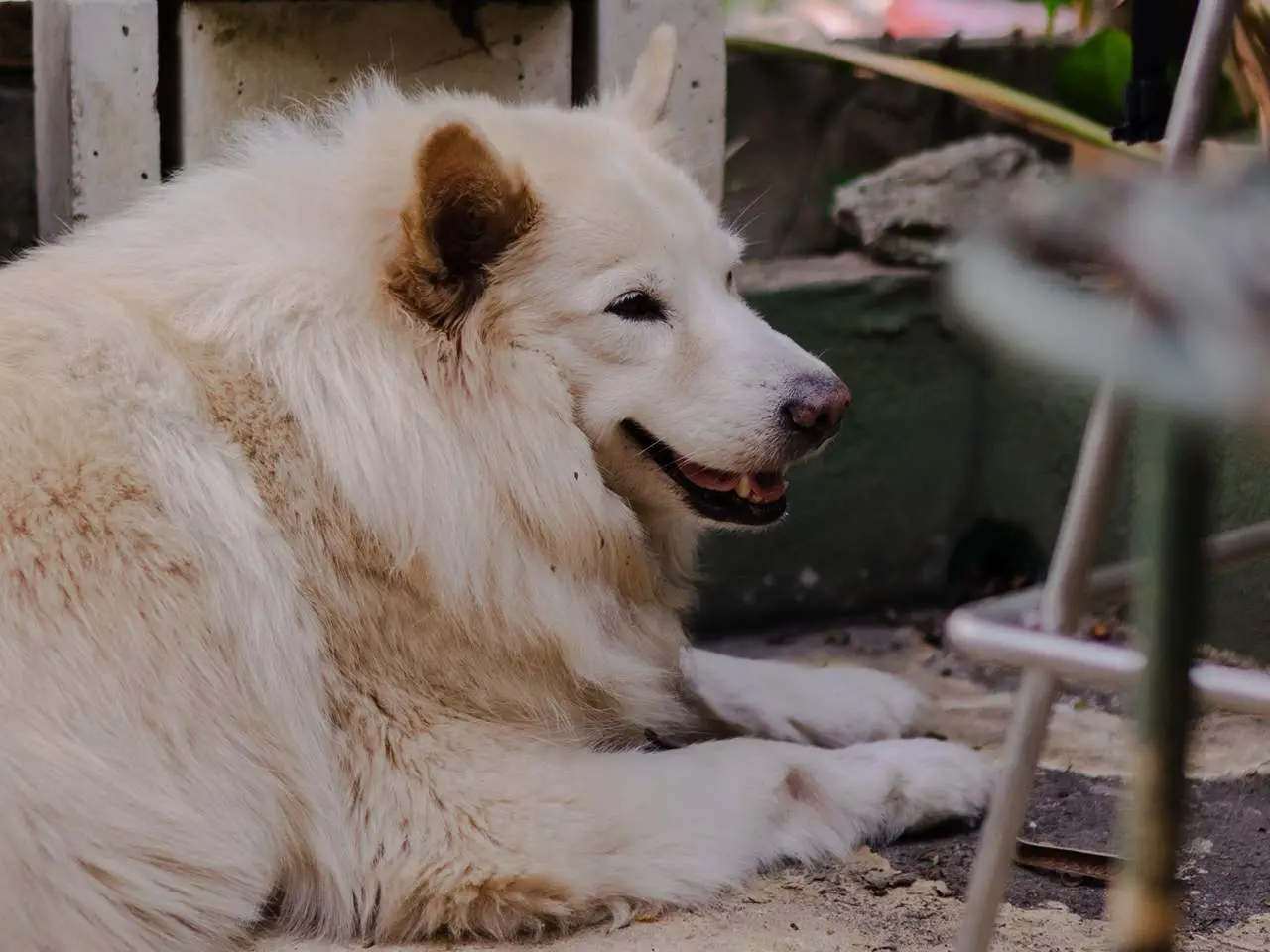
Vomiting is a common issue in dogs, and one mild episode does not always mean something is seriously wrong. If your dog seems comfortable and goes back to acting like themselves afterwards, there may be nothing to worry about right away. Still, it is worth keeping a close eye on them to make sure things settle down.
Signs of a Mild Upset
Sometimes a dog's stomach just needs a little time to settle. If your dog is otherwise behaving normally, drinking, and showing no obvious signs of discomfort, you can usually monitor them closely for a while.
- One isolated episode of vomiting
- Normal energy and behaviour
- Still willing to drink
- No obvious discomfort
- No blood in the vomit
- No severe diarrhea
- No other unusual changes
At-Home Care for Mild Vomiting
When your dog has a mild upset, keeping things simple is usually best. Your veterinarian may suggest that you withhold food for a few hours before offering a bland diet, depending on your dog's age, health, and circumstances.
- Withhold food for a few hours if your veterinarian recommends it
- Offer a bland diet when feeding resumes
- Start with small portions
- Keep fresh water available
- Avoid treats and rich foods while your dog's stomach settles
Reintroducing Food Slowly
Once your dog stops vomiting, it can be tempting to give them a normal meal because they seem hungry again. Instead, start slowly and see how their stomach handles small amounts of food and water.
- Give small portions of bland food
- Offer small amounts of water at a time
- Watch for another episode of vomiting
- Increase portions gradually if your dog is doing well
- Slowly return to regular food
Returning to Regular Food
If your dog keeps food and water down for about 24 hours, you can start moving back to their usual diet. Taking another 24 to 48 hours to make the change can be easier on their stomach than switching back all at once.
- Mix regular food with the bland diet
- Keep meals small at first
- Gradually increase the amount of regular food
- Watch your dog's appetite and behaviour
- Return to their normal feeding routine slowly
When to Seek Emergency Care
One episode is quite different from vomiting that keeps coming back. Chronic vomiting occurs repeatedly, and when vomiting occurs repeatedly over weeks, it should not be brushed off as nothing to worry about.
- Vomiting continues or becomes frequent
- Your dog cannot keep water down
- Your dog becomes unusually tired
- Your dog refuses to eat
- New symptoms appear
- Your dog does not seem to be getting better
If you decide on a visit to the vet, the veterinary team will first ask about the vomiting, what your dog has eaten, and any other changes you have noticed.
Treatment of Vomiting in Dogs
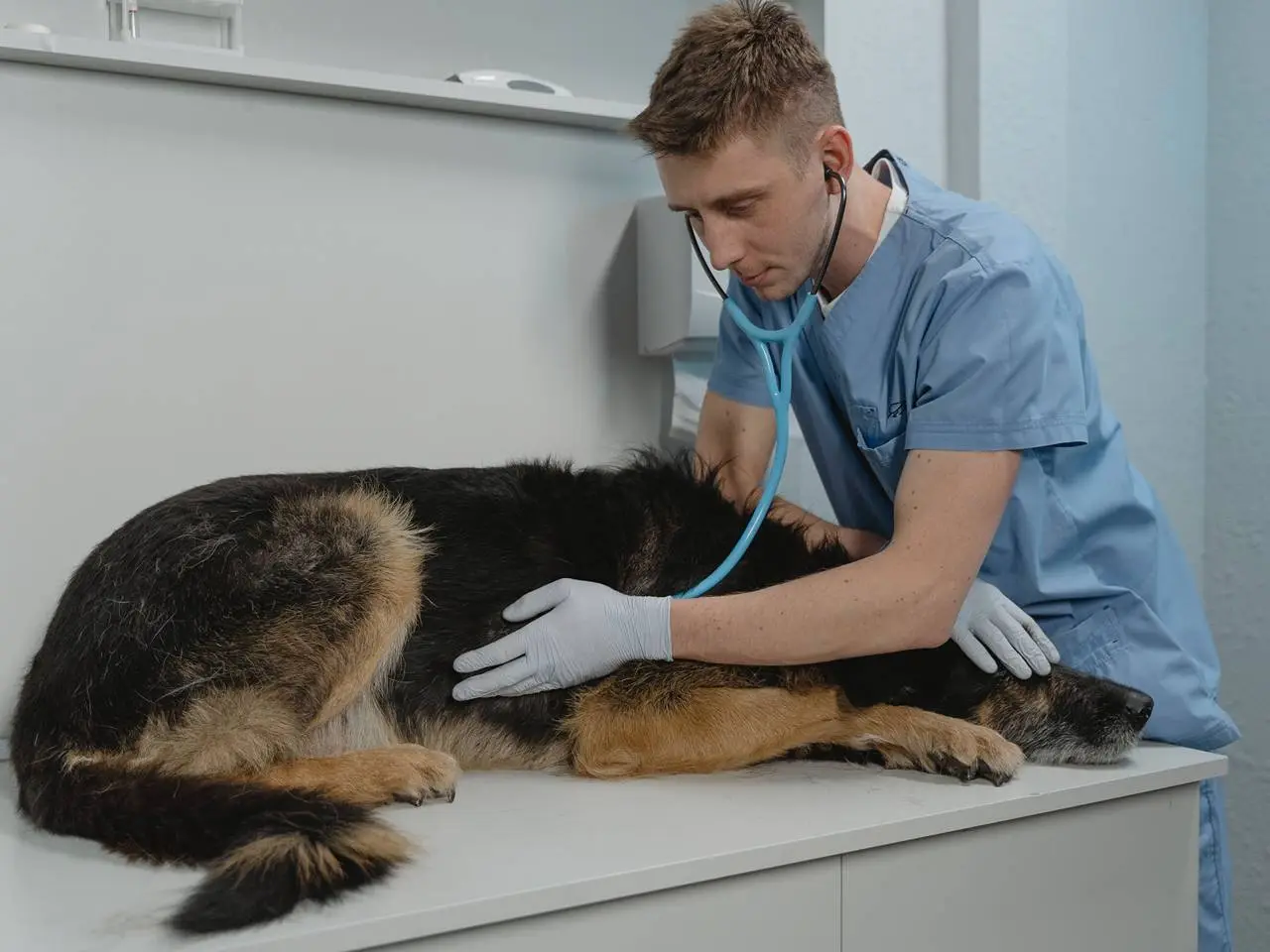
The right treatment depends on what is behind the vomiting and how your dog is doing overall. If vomiting is normal for a short-lived stomach upset, simple supportive care may be enough, but other cases need more attention.
What the Vet Will Check First
The vet will first try to work out what may be causing the vomiting. They will usually want to know what your dog has eaten, when the vomiting started, and whether you noticed anything else unusual.
- When the vomiting began
- How often it has happened
- What the vomit looks like
- Recent changes to food or routine
- Anything unusual your dog may have eaten or swallowed
Dietary Support
If the stomach just needs some time to settle, your veterinarian may suggest making a few temporary changes to your dog's meals. The goal is to give the digestive system a break without making your dog uncomfortable or overly hungry.
- Smaller meals
- A bland diet
- Temporary changes to feeding
- A gradual return to regular food
- Probiotics if recommended
Medication and Fluids
Some dogs need a little extra help, especially if they have been vomiting often or are losing too much fluid. Your veterinarian can decide whether medication or fluid support is appropriate.
- Anti-nausea medication
- Medication to protect the stomach
- Fluids given under the skin
- Intravenous fluids
- Medication for an underlying condition
Removing a Foreign Object
Sometimes the problem is that a dog has swallowed something that should not be there. A stomach full of indigestible material may need to be checked and, depending on the object and where it is located, removed by a veterinarian.
- Imaging to locate the object
- Endoscopic removal when possible
- Surgery when necessary
- Follow-up care after removal
Treating the Underlying Problem
Stopping the vomiting is not always the whole answer. If another health problem is behind it, treating that condition is an important part of helping your dog feel better.
- Treatment for parasites
- Care for pancreatitis
- Treatment for infections
- Management of organ-related disease
- Dietary management for food-related problems
When More Intensive Care Is Needed
If your dog cannot keep anything down or becomes seriously unwell, they may need closer monitoring at a veterinary clinic. It can be stressful to see your dog go through this, but proper treatment and monitoring can make a big difference.
- Intravenous fluids
- Ongoing monitoring
- Diagnostic testing
- Pain relief when needed
- Surgery or other procedures when appropriate
Final Thoughts
Vomiting in dogs can happen for all kinds of reasons, and seeing it can understandably make you worry. One episode may not be a big deal if your dog soon goes back to eating, drinking, and acting normally.
But if the vomiting keeps happening or your dog just does not seem like themselves, it is worth taking seriously. Keep an eye on how often they vomit and whether anything else seems off.
If you are unsure or have that feeling that something is not right, it is best to speak with your veterinarian. A timely check can help figure out what is going on and get your dog back to feeling like themselves.
Frequently Asked Questions
How long should acute vomiting last before a vet visit?
There is no exact amount of time that works for every dog. A single episode may settle down, but if your dog keeps vomiting or starts acting differently, it is better not to wait too long.
One episode: A dog that vomits once and quickly goes back to normal may simply need some time to settle.
Keeps happening: If your dog continues vomiting for several hours or vomits several times, it deserves more attention.
Other changes: Low energy, refusing water, pain, or unusual behaviour can make the situation more concerning.
Age matters: Puppies and older dogs may be more affected by ongoing vomiting and dehydration.
When unsure: If you are sitting there wondering whether you should wait or go in, give your veterinarian a call and explain what has been happening.
Can a vomiting dog become dehydrated overnight?
Yes. Repeated vomiting can cause a dog to lose fluids, especially if they are not able to keep water down. It can be easy to underestimate how quickly this can become a problem.
Fluid loss: Each episode of vomiting means your dog is losing some water and electrolytes.
Drinking: A dog that cannot keep water down is at greater risk of dehydration.
Things to notice: Dry or sticky gums, weakness, and less frequent urination can be warning signs.
Overnight changes: A dog that seems only mildly unwell in the evening may feel much worse if the vomiting continues overnight.
When to act: If your dog keeps vomiting and cannot hold down fluids, contact your veterinarian rather than waiting until morning.
Can anxiety or excitement trigger vomiting in dogs?
Yes, it can happen. Some dogs have sensitive stomachs and may vomit when they are very stressed, frightened, or overly excited.
Car rides: Some dogs get nauseous during travel, especially if they already dislike being in the car.
Changes at home: Visitors, loud noises, moving, or changes to their usual routine can sometimes upset them.
Excitement: Getting overly worked up around food or play may also leave some dogs feeling sick.
Every dog is different: One dog may vomit when stressed while another may show no stomach problems at all.
If it keeps happening: If the vomiting continues after things have settled down, it is worth talking to your veterinarian to make sure something else is not going on.
Is it possible for a dog to vomit from drinking too much water?
Yes. Some dogs gulp down a lot of water very quickly, particularly after playing, exercising, or getting hot, and that can sometimes upset their stomach.
Drinking too quickly: Swallowing a large amount of water at once can leave the stomach uncomfortable.
After exercise: Dogs may rush to their water bowl when they are thirsty after running or playing.
Slow things down: If your dog tends to gulp water, offering smaller amounts more often may be easier on their stomach.
Keep watching: If vomiting happens again even when your dog is drinking more slowly, there may be another reason for it.
Other symptoms: If your dog cannot keep water down or starts acting weak or unusual, contact your veterinarian.
What information should I bring to a vet visit for a vomiting dog?
It helps to have a few details ready when you take your dog in. You do not have to remember everything perfectly, but small details can give your veterinarian a better idea of what may be happening.
Timing: Remember when the vomiting started and roughly how many times it has happened.
What it looked like: If you can, take a photo of the vomit before cleaning it up. It may feel unpleasant, but it can be surprisingly useful.
Food: Tell the veterinarian what your dog has eaten recently, including treats and anything unusual.
Possible exposures: Mention anything your dog might have swallowed, including an object, medication, plant, or household substance.
Other changes: Let them know about changes in appetite, drinking, energy, bowel movements, or behaviour.

