

TL;DR: What to Know About Hydrangea Flowers and What Happens If Your Cat Eats Them
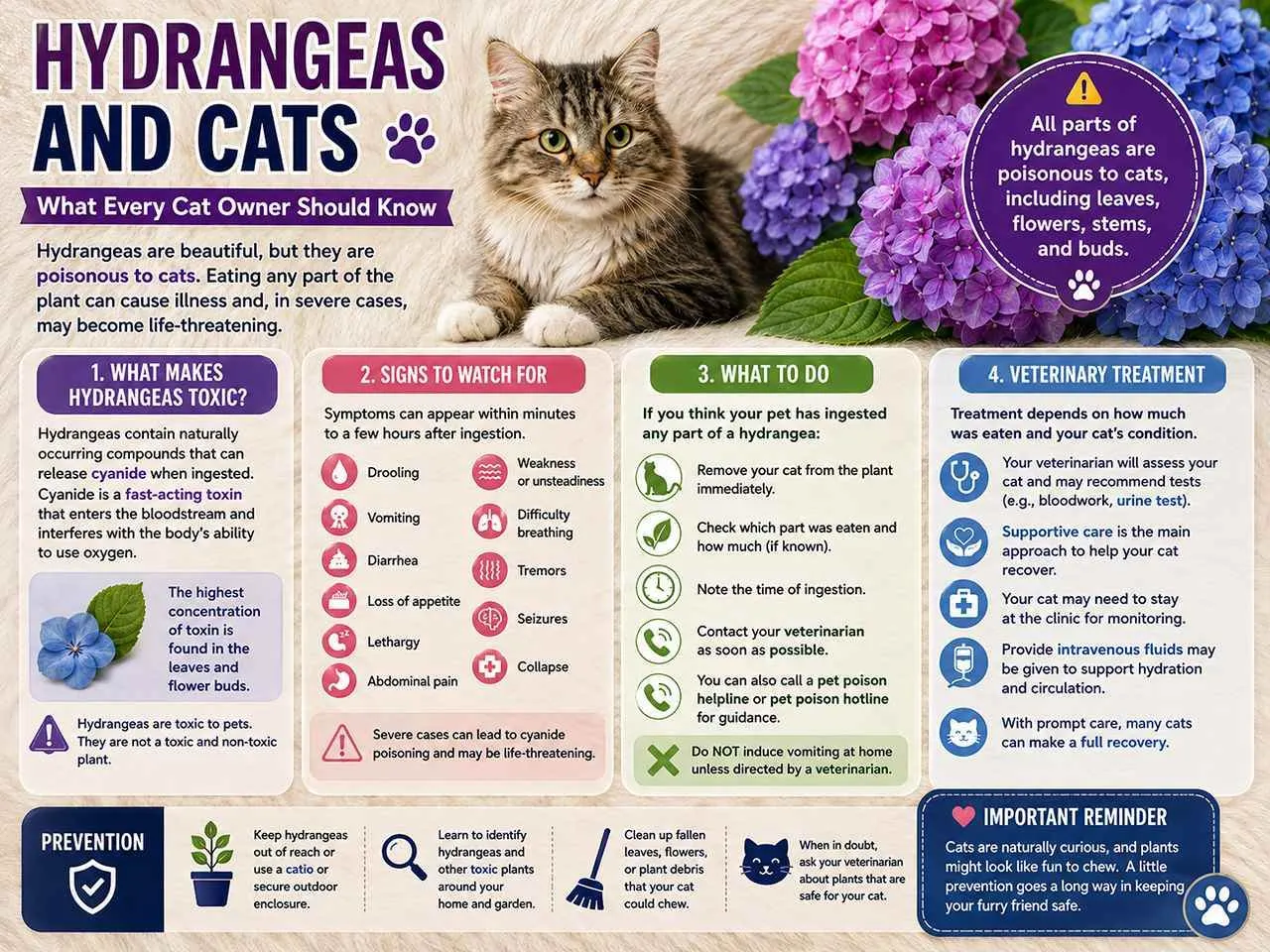
- Hydrangeas are considered potentially toxic to cats, so they are not plants your cat should be allowed to chew on.
- They contain cyanogenic glycosides, including amygdalin, which can release cyanide after the plant is eaten.
- Possible signs include drooling, vomiting, diarrhea, loss of appetite, lethargy, and stomach discomfort.
- In more serious cases, a cat may develop weakness, trouble breathing, tremors, seizures, or collapse.
- How much your cat eats can affect how serious the reaction may be.
- If your cat eats part of a hydrangea, move them away from the plant and try to work out what they ate and how much.
- Do not try to induce vomiting at home unless your veterinarian specifically tells you to.
- It is best to contact your veterinarian as soon as possible, especially if your cat may have eaten a large amount.
- If your cat seems seriously unwell or their condition is getting worse quickly, seek veterinary help right away.
- With proper veterinary care and supportive treatment, cats can make a full recovery.
If you have just seen your cat nibbling on a hydrangea or if you think your pet has eaten something potentially toxic, it is completely understandable to feel worried. Call us if you are unsure what to do next, and our professional vets can assess your pet, answer your questions, and provide the care they need.
Are hydrangeas poisonous to cats, or are these pretty garden flowers safe to have around your feline? If you have a curious cat that likes to chew on plants, you may have wondered what could happen if they ingest part of a hydrangea plant. It is a common concern for pet owners who have these ornamental shrubs around the home and garden.
Hydrangeas are commonly found in gardens, and some people also keep them as houseplants or use their flowers for decoration. Since cats can be surprisingly curious about plants, it is worth knowing whether hydrangeas are toxic to cats.
Even if your cat has never shown interest in plants before, it can still be helpful to know what to do if they suddenly decide to take a bite. Read on to learn more about hydrangeas and cats, the parts of the hydrangea plant that may be a concern, and what pet owners should know about hydrangea poisoning in cats.
Are Hydrangeas Poisonous to Cats?
If you have a cat that likes to nibble on plants, you have probably wondered whether hydrangeas are something to worry about. They may look harmless, but hydrangeas are considered potentially toxic to cats, so it is better not to assume they are safe.
What Are Hydrangeas?
Hydrangeas, also called the hortensia plant, are flowering shrubs from the Hydrangeaceae family. You may also hear them called hortensia, and there are many different species and varieties of these plants.
Are Hydrangeas Safe for Cats?
Hydrangeas are not considered non-toxic to cats. They are not usually placed in the same group as highly dangerous plants such as certain lilies, but cats should still not be allowed to chew on them.
- Hydrangeas are not completely safe for cats to eat.
- The plant contains a toxin that makes ingestion a concern.
- Curious cats may be more likely to chew on plants.
- Keeping potentially toxic plants out of reach can help prevent accidental exposure.
What to Know About Hydrangea Poisoning in Cats
Hydrangea toxicity is mainly a concern when a cat eats part of the plant. Hydrangeas are poisonous to cats because they contain a cyanogenic glycoside that can release a toxic substance called cyanide when the plant is digested.
What Makes Hydrangeas Toxic?
The main compound of concern is amygdalin, a cyanogenic glycoside toxin found in the plant. When a cat ingests any part of plant material containing this compound, it can break down and release cyanide, which may lead to cyanide poisoning if enough is consumed.
- The toxin can be present in different parts of the plant.
- Cyanide is a fast-acting toxin that enters the bloodstream and interferes with the body’s ability to use oxygen properly.
- Leaves and flowers may be eaten if a curious cat chews on a hydrangea.
- The risk can be greater if a cat consumes large amounts.
- How much was eaten can affect how serious the reaction may be.
- For this reason, hydrangeas are considered toxic to pets, rather than non-toxic.
Clinical Signs of Hydrangea Poisoning
If you suspect your cat has eaten a hydrangea, it helps to know what changes to look for. The signs and symptoms can vary, with gastrointestinal problems being possible after ingestion and more serious exposure potentially causing other symptoms. Possible signs include:
- Drooling: Your cat may drool more than usual after eating plant material.
- Vomiting: Hydrangea ingestion can cause vomiting and stomach upset.
- Diarrhea: Vomiting and diarrhea may occur together.
- Loss of appetite: Your cat may not seem interested in food while feeling unwell.
- Lethargy: They may become unusually tired, weak, or less active.
- Abdominal discomfort: Gastrointestinal upset may make your cat seem restless or uncomfortable.
- Weakness or unsteadiness: More significant exposure may affect normal movement and strength.
- Difficulty breathing: Severe cases may cause changes in breathing.
- Tremors: Muscle trembling can occur with more serious toxicity.
- Seizures: Severe poisoning may cause neurological signs such as seizures.
- Collapse: A severely affected cat may become extremely weak and collapse.
What to Do If Your Cat Has Eaten Hydrangeas

If you catch your cat eating a hydrangea, it is understandable to feel worried, especially if you are not sure how much they swallowed. The best thing you can do is stay calm, keep them away from the plant, and get veterinary advice rather than trying to handle the situation on your own.
Steps to Take After Ingestion
A little information can go a long way when you speak with a veterinarian. Try to remember what your cat ate, roughly how much they ingested, and when it happened so the vet can better assess the situation.
- Move your cat away from the plant: Make sure they cannot eat any more of it.
- Check what they ate: If you can, identify which part of the hydrangea was ingested.
- Estimate how much was eaten: Even a rough idea can be useful when speaking with your veterinarian.
- Keep a photo of the plant: This can help confirm exactly what your cat ate if you are unsure.
- Note when it happened: Try to remember approximately when the ingestion occurred.
- Keep an eye on your cat: Watch for anything unusual while you arrange veterinary advice.
- Contact your veterinarian: If you suspect your pet has eaten any part of the plant, see your veterinarian as soon as possible.
- Do not induce vomiting at home: Only do this if your veterinarian specifically tells you to.
- Get emergency help if needed: If your cat becomes seriously unwell or their condition changes quickly, contact a pet poison helpline or a 24-hour emergency veterinary service or see a vet immediately.
Veterinary Treatment of Hydrangea Poisoning in Cats
If your cat needs treatment after eating a hydrangea, the care they receive will depend on how much they ate and how they are doing. It can be scary to see your pet feeling unwell, but a veterinarian can assess the situation and decide what kind of care is appropriate.
What Treatment May Involve
There is no single treatment for every case, so the veterinarian will look at your cat's individual situation. The main goal is to provide supportive care, keep your cat stable, and watch for any changes while they recover.
- Initial assessment: The veterinarian may ask what your pet ate, how much they consumed, and when it happened.
- Supportive care: Your cat may receive care to help maintain hydration and normal body functions.
- Provide intravenous fluids: IV fluids may be used if your cat needs extra support with hydration or circulation.
- Close monitoring: Your cat may be watched for changes in their condition, especially after a larger exposure.
- Additional testing: A veterinarian may recommend a urine test or other checks if they are needed to assess your cat's condition.
- Treatment for complications: If your cat develops other problems, the veterinary team can provide appropriate care for those symptoms.
- Observation: A cat with more significant exposure may need to stay at the clinic for continued monitoring.
- Full recovery: With timely veterinary care and appropriate support, a cat may go on to make a full recovery.
Final Thoughts
Hydrangeas can look beautiful around the home, but they are not something cats should be allowed to chew on. If your cat takes a bite, it can be worrying, especially when you are not sure how much they ate.
Keep an eye out for signs such as vomiting, diarrhea, drooling, or unusual weakness, and do not try to make your cat vomit at home. If your cat has eaten part of a hydrangea, contacting a veterinarian is the safest way to know what to do next.
A quick call can give you some peace of mind and help you avoid guessing about your cat's health. When it comes to potentially toxic plants, keeping them out of your cat's reach is a simple way to help keep them safe.
Frequently Asked Questions
How does the toxin in hydrangeas compare with that in a lily?
Hydrangeas and lilies contain different toxins, so the risks are not quite the same. This is worth knowing because some lilies can be extremely dangerous to cats, while hydrangeas have a different toxicity profile.
Different compounds: Hydrangeas contain cyanogenic compounds, while certain lilies contain substances that can cause serious kidney damage.
Different risks: The type of plant and how much your cat ate both matter when assessing an exposure.
Lily concerns: True lilies and daylilies can cause serious illness in cats, even after relatively small exposures.
Plant identification: A clear photo or sample can help a veterinarian figure out which plant your cat encountered.
When unsure: If you cannot identify the plant, it is better to ask a veterinarian than assume it is safe.
Are hydrangeas toxic to cats even when grown outdoors?
Yes. Growing hydrangeas outside does not make them harmless if your cat can reach them. If your cat enjoys spending time outdoors, it is worth taking a quick look at the plants around the areas they use.
Garden access: Outdoor cats may come across hydrangeas while exploring gardens or nearby areas.
Plant placement: Keeping the shrubs away from places your cat regularly visits can lower the chance of chewing.
Outdoor enclosure: A catio can give your cat some outdoor time while helping keep them away from plants you are concerned about.
Curious behaviour: Some cats will investigate plants simply because they are there.
Plant choices: When planning a cat-friendly garden, check which plants are toxic and non-toxic instead of assuming common flowers are safe.
Which hydrangea varieties contain the toxin?
There are many hydrangea species and varieties, and they can look quite different from one another. If your cat eats one, knowing exactly which hydrangea you have can make it easier for a veterinarian to assess the situation.
Different varieties: Hydrangeas come in many forms, with different flower shapes, colours, and growing habits.
Plant identification: Knowing the species or variety can provide useful information when discussing the exposure.
Plant parts: The part of the plant your cat ate can also be relevant when assessing the risk.
Highest concentration: The amount of potentially harmful compounds can vary between different plant parts and species.
When uncertain: Take a clear photo of the plant or keep its label nearby if you need to identify it later.
Can cats develop long-term problems after hydrangea exposure?
Most cats can recover after appropriate care, but the outcome depends on how serious the exposure was. A cat that eats a small amount may have a very different experience from one that consumes a large amount and becomes seriously ill.
Severity matters: A more significant exposure generally raises greater concern for complications.
Individual response: Cats can react differently to the same type of plant exposure.
Early attention: Getting veterinary attention promptly can help catch potential problems early.
Follow-up care: Your veterinarian may recommend additional monitoring depending on how your cat is doing.
Recovery: With proper care and monitoring, many affected cats can return to their normal routine.
Are dried hydrangeas still a concern for cats?
Yes. Drying a hydrangea does not automatically make it safe for cats. If your cat likes to chew flowers, dried arrangements are best kept somewhere they cannot reach.
Dried arrangements: Hydrangeas are often used in bouquets, wreaths, and other decorations.
Chewing risk: A curious cat can still bite or swallow pieces of a dried flower.
Fallen pieces: Small fragments that fall onto the floor can be easy for a cat to investigate.
Home placement: Keep dried hydrangeas somewhere your cat cannot climb or reach them.
Extra help: If your cat eats dried hydrangea and you are unsure what to do, a pet poison hotline may be able to provide guidance while you arrange veterinary care.

