


TL;DR: Puppy Strangles Causes, Symptoms, and Treatment
- Puppy strangles, also called juvenile cellulitis, is a rare inflammatory skin condition that usually affects young puppies.
- While the exact cause is still unknown, experts believe it is linked to an abnormal immune response rather than a bacterial infection, making it one of several possible causes of skin inflammation in puppies.
- The most common signs include facial swelling, skin lesions, swollen lymph nodes, eye and ear changes, fever, and a noticeable drop in energy.
- Because puppy strangles can look like other skin conditions, your veterinarian may recommend tests such as skin scrapings, skin cytology, or skin biopsies to confirm the diagnosis.
- Treatment for puppy strangles often includes corticosteroids such as prednisone, while antibiotics may be added if a secondary bacterial infection develops.
- If your puppy is prescribed prednisone, be sure to follow the taper schedule exactly as instructed.
- Stopping the medication too soon can increase the risk of symptoms returning.
- Most puppies recover well when they receive prompt veterinary care and complete their full treatment plan.
- When treatment is delayed, the condition can become more serious and may lead to avoidable complications.
It is never easy to see your puppy feeling unwell, especially when the symptoms appear so suddenly. If you notice swelling, skin sores, or any other signs that concern you, contact us right away. Our expert and passionate vets are here to examine your puppy, answer your questions, and provide the prompt treatment and compassionate care they need to get back to feeling their best.
Have you ever noticed your young puppy wake up with a swollen face or unusual skin changes and wondered what was going on? It can be a worrying sight for any pet owner. Puppy strangles, also called juvenile cellulitis, is a rare skin disease that affects young puppies and needs prompt veterinary attention.
Because puppy strangles can look like other skin conditions, it is not always easy to tell what is causing the problem. That is why it is important to have a veterinarian examine your puppy instead of trying to guess. The sooner you know what you are dealing with, the sooner your puppy can get the right care.
Hearing that your puppy is diagnosed with puppy strangles can feel overwhelming at first, but learning about the condition can make it easier to know what comes next. Understanding the symptoms, possible causes, treatment options, and veterinary care can help you feel more prepared. Read on to learn what puppy strangles is, what to watch for, and how it is treated.
What Is Puppy Strangles in Dogs
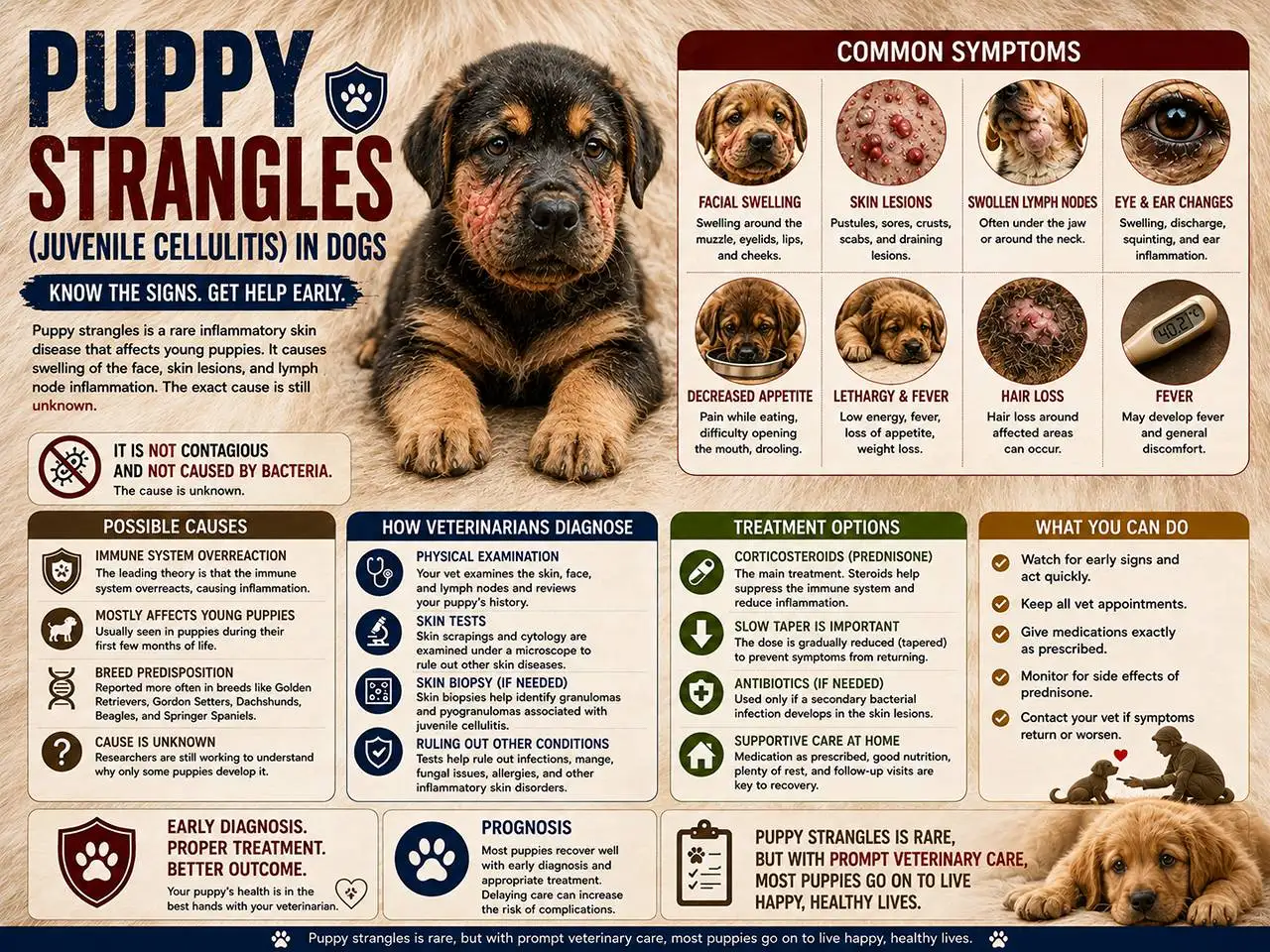
Hearing that your puppy has puppy strangles can be scary, especially if you have never come across the condition before. Puppy strangles, also called juvenile cellulitis, is a rare inflammatory skin condition that usually affects puppies during their first few months of age. Although the exact cause is still unknown, veterinarians recognize it as sterile granulomatous dermatitis and lymphadenitis.
What Makes Puppy Strangles Different?
At first, puppy strangles can seem like a regular skin infection, but it is actually quite different. It is not caused by bacteria and is not contagious to other dogs. Since it can look similar to conditions such as mange or a bacterial skin infection, it is important to have a veterinarian determine what is really going on.
Key facts about puppy strangles:
- It is also known as juvenile cellulitis.
- It is an uncommon skin condition in young puppies.
- It usually develops during the first few months of age.
- The exact underlying cause is still unknown.
- It is different from a typical bacterial skin infection.
Possible Causes of Puppy Strangles
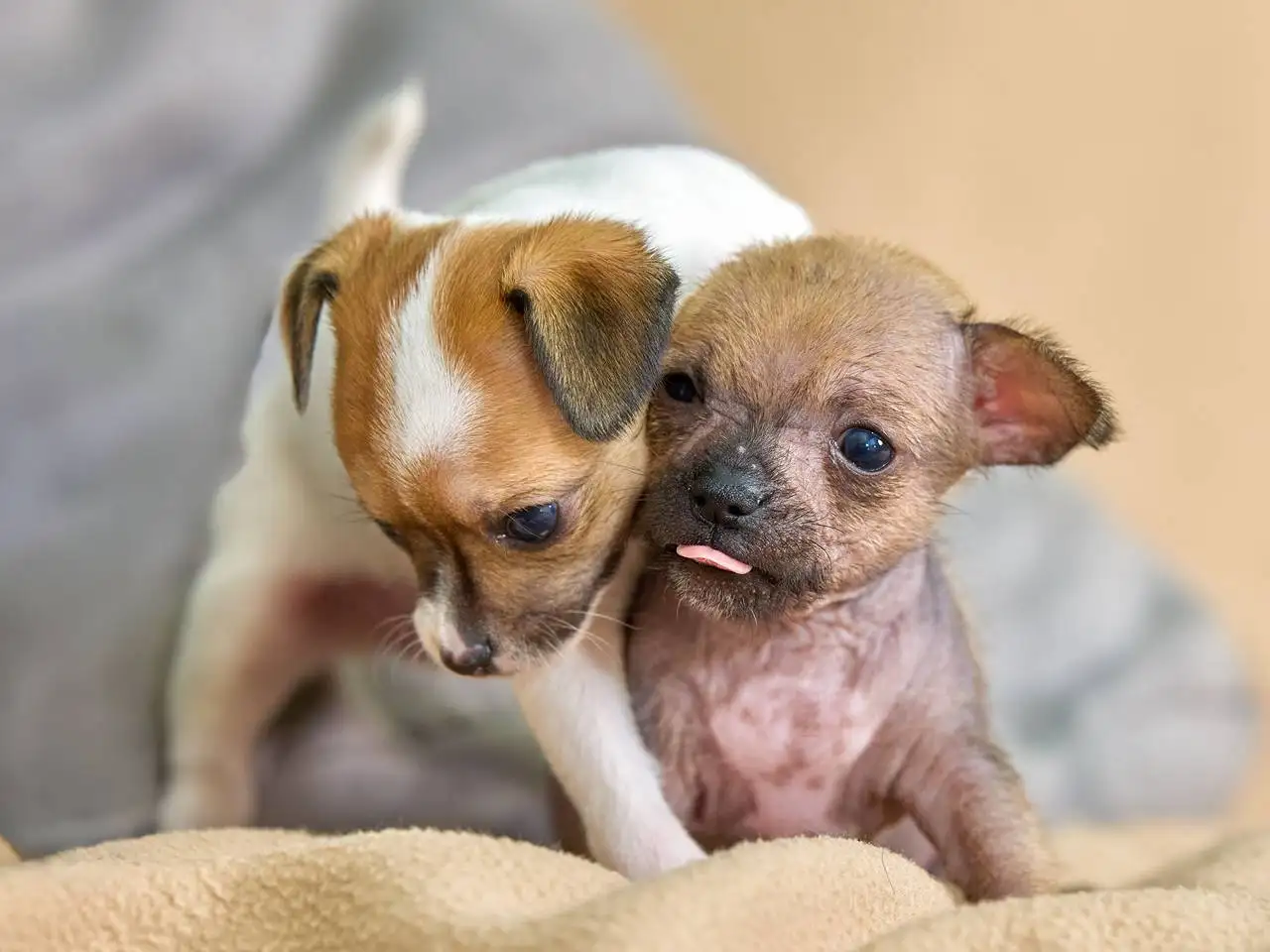
It can be frustrating to hear that the cause is unknown, especially when you just want clear answers. Even though veterinarians have studied this condition for years, there is still no single cause that explains why it develops in some puppies but not others.
An Immune System That Reacts Differently
One of the strongest theories is that a puppy's immune system overreacts and causes inflammation instead of protecting the body as it should. This means puppy strangles is not believed to begin as a bacterial infection, even though it can sometimes look like one.
- It is thought to be linked to an unusual immune response.
- It is not believed to start as a bacterial infection.
- Scientists are still working to understand why it happens.
Could Some Breeds Be More Likely to Develop It?
You might wonder if certain puppies are simply more at risk than others. Researchers have noticed that breeds such as Golden Retrievers and Gordon Setters appear more often in reported cases. However, there is still not enough evidence to say that puppy strangles is hereditary. Breeds reported in some cases include:
- Golden Retrievers
- Gordon Setters
- Dachshunds
- Beagles
- Springer Spaniels
Why Does It Mostly Affect Young Puppies?
Puppy strangles is usually seen during the first few months of life, while cases in adult dogs are rare. No one knows exactly why young puppies are more likely to develop the condition, but age is thought to play an important role. Researchers are still exploring:
- Why young puppies are more vulnerable.
- Why adult dogs are rarely affected.
- What changes early in a puppy's development may be involved.
Why Are There Still So Many Unknowns?
It is completely understandable to want a clear answer about what causes puppy strangles. Unfortunately, researchers are still trying to connect the pieces and learn why only a small number of puppies develop this condition.
- Possible hereditary influences.
- How the immune system triggers inflammation.
- Why only some puppies are affected.
- Other biological factors that may be involved.
Can Puppy Strangles Be Prevented?
Since the exact cause is still unknown, there is no proven way to prevent puppy strangles. The best thing you can do is keep an eye on your puppy's health and arrange a veterinary visit if you notice anything unusual.
- There is no guaranteed way to prevent puppy strangles.
- Regular veterinary checkups can help catch health concerns early.
- Prompt treatment may lower the risk of complications if puppy strangles develops.
Common Symptoms of Puppy Strangles in Puppies
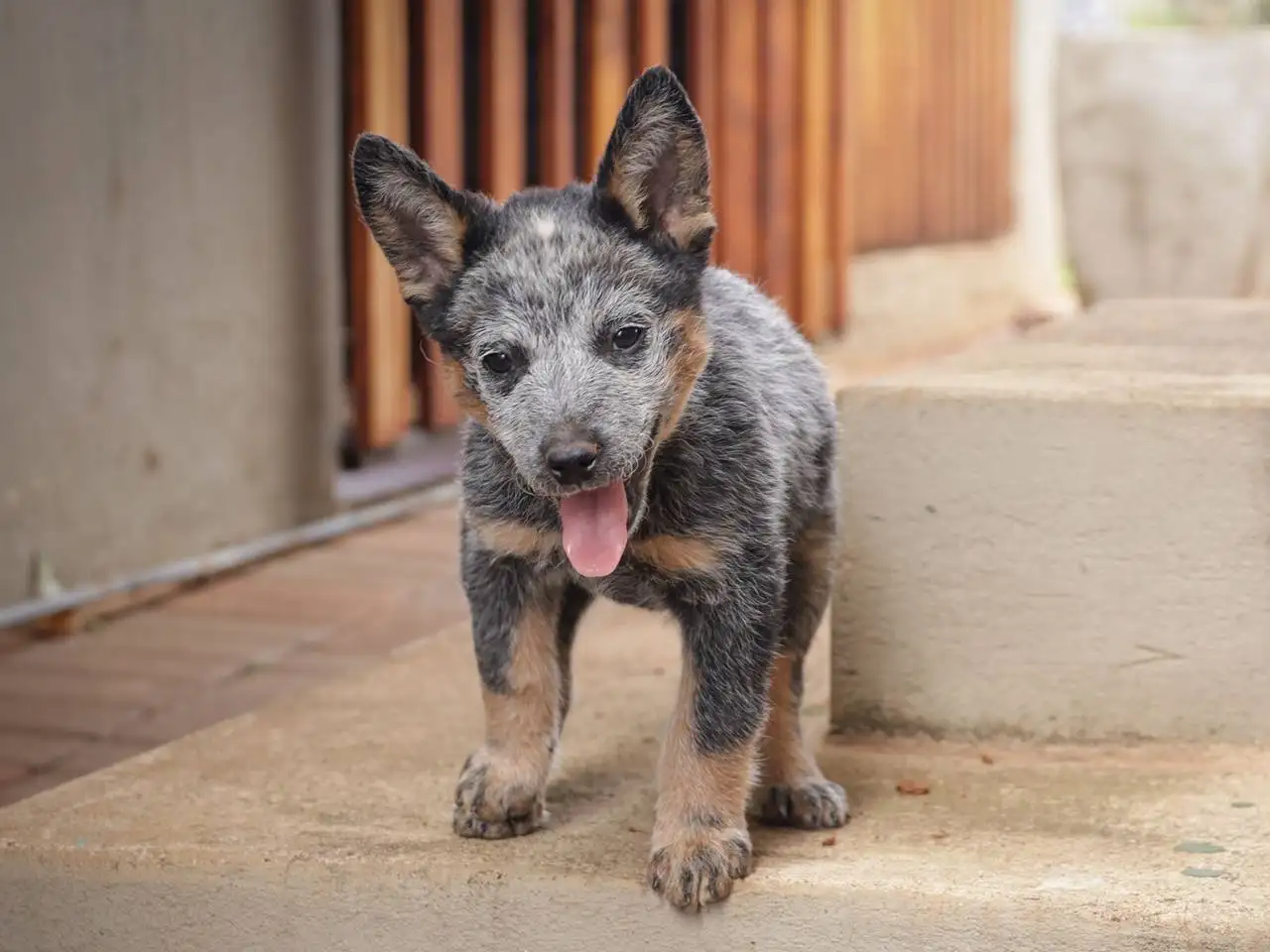
It can be upsetting to see your puppy suddenly develop unusual changes, especially if they seem to appear overnight. Because puppy strangles is a rare skin condition, many pet owners are not familiar with the early warning signs of juvenile cellulitis. Knowing what to look for can help you recognize the problem sooner and get your puppy the care it needs.
Swelling Around the Face
For many puppies, one of the first things you'll notice is swelling around the face. It often starts around the muzzle and can spread to the eyelids, lips, or ears.
- Swollen muzzle
- Swollen eyelids
- Swollen lips
- Swollen cheeks
- Swelling around the ears
Skin Lesions
As the condition develops, changes in the skin usually become easier to spot. The skin lesions associated with puppy strangles may look mild at first but can become worse if a secondary bacterial infection occurs.
- Red, inflamed skin
- Pustules
- Crusts
- Open sores
- Draining lesions
- Scabs
Swollen Lymph Nodes
Another common clinical sign of puppy strangles is swollen lymph nodes beneath the jaw. They may feel firm or painful, and you might notice swelling around your puppy's neck.
- Enlarged lymph nodes beneath the jaw
- Tenderness around the neck
- Swelling under the chin
Eye and Ear Changes
The inflammation can also affect the eyes and ears, making your puppy look uncomfortable. Some puppies become more sensitive to light or dislike having these areas touched.
- Swollen eyelids
- Eye discharge
- Squinting
- Ear swelling
- Ear discharge
Eating and Drinking Problems
When the face becomes swollen or sore, everyday activities such as eating and drinking can become difficult. Your puppy may hesitate at the food bowl or stop eating as much as usual.
- Pain when opening the mouth
- Difficulty chewing
- Trouble drinking water
- Excessive drooling
Changes in Behaviour
Puppies that do not feel well often behave differently. Even playful puppies may become quiet, tired, or less interested in their favourite activities.
- Low energy
- Reduced appetite
- Sleeping more than usual
- Less interest in playing
- General discomfort
Whole-Body Signs
Some puppies develop symptoms that affect more than just the skin. These signs often show that the body is working hard to respond to the inflammation.
- Fever
- Lethargy
- Weight loss
- Dehydration
- Elevated white blood cell count
Possible Complications
If puppy strangles is left untreated, the condition can become more serious over time. While many puppies recover well with proper veterinary care, delaying treatment increases the risk of complications.
- Hair loss around affected areas
- Secondary bacterial infection
- Worsening skin lesions
- Slow healing
- Increased pain
- In severe cases, puppy strangles can be life-threatening
How Veterinarians Diagnose Puppy Strangles

Seeing your puppy with swollen skin or sores can make you want answers right away. Unfortunately, diagnosing puppy strangles is not always straightforward because several skin conditions can look very similar. Your veterinarian will usually combine a physical exam with a few diagnostic tests before confirming juvenile cellulitis.
Learning About Your Puppy's Health
The appointment usually starts with a conversation about your puppy's recent health. Even small details can help your veterinarian understand how the condition developed and what tests may be needed.
- When you first noticed the changes
- How the symptoms have progressed
- Any recent illnesses or medications
- Changes in appetite, energy, or behaviour
Taking a Closer Look at the Skin
Next, your veterinarian will carefully examine the affected areas. The appearance and location of the skin changes can provide helpful clues, especially when comparing them with conditions that are similar to juvenile cellulitis.
- The location of the affected areas
- The appearance of the skin
- The extent of the inflammation
- Swollen lymph nodes and nearby tissues
Running Diagnostic Tests
Because appearance alone cannot confirm the diagnosis, your veterinarian may recommend a few simple tests. These help rule out other skin problems before deciding that puppy strangles is the most likely cause.
- Skin scrapings
- Skin cytology
- Examination under a microscope
- Blood tests, when appropriate
When a Skin Biopsy Is Needed
Sometimes more information is needed before a diagnosis can be confirmed. In those cases, skin biopsies may be recommended to look for changes in the tissue that are associated with juvenile cellulitis.
- Small samples taken from affected skin
- Laboratory analysis
- Examination under a microscope
- Identification of granulomas and pyogranulomas
Ruling Out Other Skin Conditions
Many skin diseases can cause redness, swelling, or sores, so it is important to rule them out first. This helps your puppy receive the right treatment instead of medication for a condition they do not have.
- Bacterial skin infections
- Mange
- Fungal skin diseases
- Allergic skin conditions
- Other inflammatory skin disorders
Confirming the Diagnosis
After reviewing the examination and test results, your veterinarian can determine whether your puppy has puppy strangles. Once the diagnosis is confirmed, the next step is creating a treatment plan that fits your puppy's condition.
Veterinary Treatment Options for Puppy Strangles
Finding out that your puppy is affected with juvenile cellulitis or puppy strangles can feel overwhelming, but the good news is that many puppies recover well with prompt veterinary care. Since the cause of juvenile cellulitis is still unknown, treatment of puppy strangles focuses on controlling the inflammation, helping your puppy feel more comfortable, and preventing complications.
Prednisone Is Often the First Choice
In many cases, your veterinarian will prescribe prednisone (steroid) to treat puppy strangles. This corticosteroid helps suppress the immune system, which reduces the inflammation causing your puppy's symptoms.
- Prednisone is commonly used to treat puppy strangles.
- It helps suppress the immune system.
- The dosage is based on your puppy's individual needs.
- Your veterinarian will monitor your puppy throughout treatment.
Why the Medication Is Reduced Slowly
As your puppy starts feeling better, it might seem like the medication is no longer needed. However, prednisone should be reduced gradually through a taper schedule rather than stopped suddenly, which helps lower the chance of signs and symptoms returning.
- Follow the taper schedule exactly as prescribed.
- Do not stop prednisone without your veterinarian's advice.
- The taper may take several weeks.
- Follow-up visits help track your puppy's recovery.
When Antibiotics May Be Prescribed
Because puppy strangles is not caused by bacteria, antibiotics are not always part of the treatment plan. They are usually prescribed only if a secondary infection develops in the affected skin.
- Antibiotics treat a secondary infection.
- Not every puppy needs an antibiotic.
- The medication depends on your puppy's condition.
- Always finish the prescribed course.
Helping Your Puppy Recover at Home
Your care at home is just as important as the medication. A quiet place to rest and following your veterinarian's instructions can make recovery much easier for your puppy.
- Give all medications on schedule.
- Encourage your puppy to eat and drink.
- Provide a calm place to rest.
- Attend every follow-up appointment.
- Let your veterinarian know about any concerns.
Possible Side Effects of Prednisone
Like most medications, prednisone can cause side effects, and knowing what to expect can help you feel more prepared. Most puppies can handle the medication well, but it's still a good idea to watch for any changes. Common side effects of prednisone include:
- Increased thirst
- Increased appetite
- More frequent urination
- Panting
- Behaviour changes
Recovery and Follow-Up Care
It is always encouraging to see your puppy starting to improve, but recovery does not end when the swelling goes down. Finishing the full treatment plan and keeping follow-up appointments helps reduce the risk of symptoms returning and gives your puppy the best chance of a full recovery.
Final Thoughts
Puppy strangles can sound frightening, especially if you're hearing about it for the first time. Although it's a serious condition, many puppies recover well when treatment begins as soon as possible.
Sticking to your veterinarian's instructions and giving your puppy plenty of time to heal can make the recovery process much easier. It can take a little time and patience, but seeing your puppy regain its energy and health is worth it.
If you ever notice unusual swelling, skin changes, or other concerning symptoms, don't wait to have them checked. Getting help early gives your puppy the best chance of a full and healthy recovery.
Frequently Asked Questions
Can puppy strangles come back after treatment is finished?
It is completely understandable to worry about puppy strangles coming back once your puppy starts feeling better. The good news is that most puppies recover fully, but there is still a small chance the condition could return if treatment is stopped too soon.
Finish the full treatment: Even if your puppy looks healthy again, continue giving the medication exactly as your veterinarian prescribes.
Follow the taper schedule: Corticosteroids need to be reduced slowly so your puppy's body has time to adjust.
Keep an eye on your puppy: Watch for swelling, skin sores, or other symptoms that look similar to the first episode.
Don't skip follow-up visits: These appointments help your veterinarian make sure your puppy is recovering as expected.
Reach out if you're concerned: If you notice anything unusual after treatment, contact your veterinarian for advice.
How long does the corticosteroid taper usually take for puppy strangles?
Every puppy recovers a little differently, so there is no set timeline for a corticosteroid taper. Some puppies are ready to reduce their medication sooner, while others need a little more time to recover safely.
Recovery comes first: Your veterinarian will decide the taper schedule based on your puppy's progress.
Every puppy is different: Some tapers last only a few weeks, while others take longer.
Take it one step at a time: Lowering the medication gradually helps reduce the risk of problems.
Attend follow-up visits: Regular checkups help your veterinarian know when it's safe to lower the dose.
Stick with the plan: Avoid changing the schedule unless your veterinarian tells you to.
What should I do if I miss a dose of my puppy's corticosteroid medication?
Missing a dose can happen, especially when you're juggling a busy day. If it does, don't panic, but don't guess what to do either.
Contact your veterinarian: They can tell you the safest way to get back on schedule.
Avoid giving extra medication: Doubling the next dose is usually not recommended unless your veterinarian advises it.
Continue the treatment plan: Follow the instructions you are given for the next dose.
Watch your puppy closely: Let your veterinarian know if you notice any changes after the missed medication.
Use reminders: A phone alarm or medication chart can make future doses easier to remember.
Are there any long-term effects associated with puppy strangles after recovery?
Most puppies go on to live happy, healthy lives after recovering from puppy strangles. In more severe cases, however, some puppies may be left with small scars where the skin was most affected.
A full recovery is common: Most puppies do not have lasting health problems.
Minor scarring can happen: Deep skin sores may leave small marks after they heal.
Hair may grow back differently: Some areas may not look exactly the way they did before.
Keep watching your puppy: Let your veterinarian know if you notice any lasting skin changes.
Regular checkups provide peace of mind: They help make sure your puppy continues to do well.
How can I support my puppy at home during the treatment of puppy strangles?
Looking after a sick puppy can be stressful, and it's natural to want to do everything you can to help. Along with the prescribed medication, a little extra care and patience at home can go a long way during recovery.
Give every medication on time: Following the treatment plan gives your puppy the best chance to recover.
Create a quiet place to rest: A calm environment can help your puppy feel more comfortable.
Encourage your puppy to eat and drink: Proper nutrition and hydration can help support recovery.
Keep an eye on your puppy's condition: Contact your veterinarian right away if symptoms worsen or new ones develop.
Be patient: Recovery takes time, but many puppies are back to their playful selves with proper care and treatment.

