


TL;DR: What You Need to Know About Macadamia Nuts
- Toxic to dogs: Macadamia nuts are poisonous to dogs, and even small amounts can cause illness. Raw, roasted, and salted macadamia nuts are all unsafe.
- Know the warning signs: Macadamia nut poisoning can include vomiting, weakness, tremors, fever, lethargy, and loss of coordination. Symptoms can appear within hours of ingestion.
- Quick action matters: If your dog eats macadamia nuts, seek veterinary attention right away. Don't wait for symptoms to appear, and never induce vomiting unless your veterinarian advises you to.
- Early care can help: There is no specific antidote, but veterinarians can provide supportive treatment, including IV fluids and other care to manage symptoms and help your dog recover comfortably.
- Most dogs recover well: The prognosis is generally very good with prompt and appropriate veterinary care. Symptoms often resolve as the toxin clears from the body.
- Keep them out of reach: Storing macadamia nuts securely and avoiding shared snacks is a simple way to reduce the risk to dogs and prevent accidental poisoning.
Have questions? Contact us. We're happy to help you understand what foods are safe for your pet and when an accidental ingestion may need veterinary care.
Is your dog eyeing the macadamia nuts on your kitchen counter? Before you let them sneak a piece, here's what every dog owner needs to know. While macadamia nuts are a beloved snack for people, they pose a serious health threat to our four-legged companions.
What might seem like a harmless dog treat can quickly turn into a veterinary emergency. Read on to find out exactly why these nuts are so dangerous, what signs to watch for, and what to do if your dog gets into them.
Can Dogs Eat Macadamia Nuts?
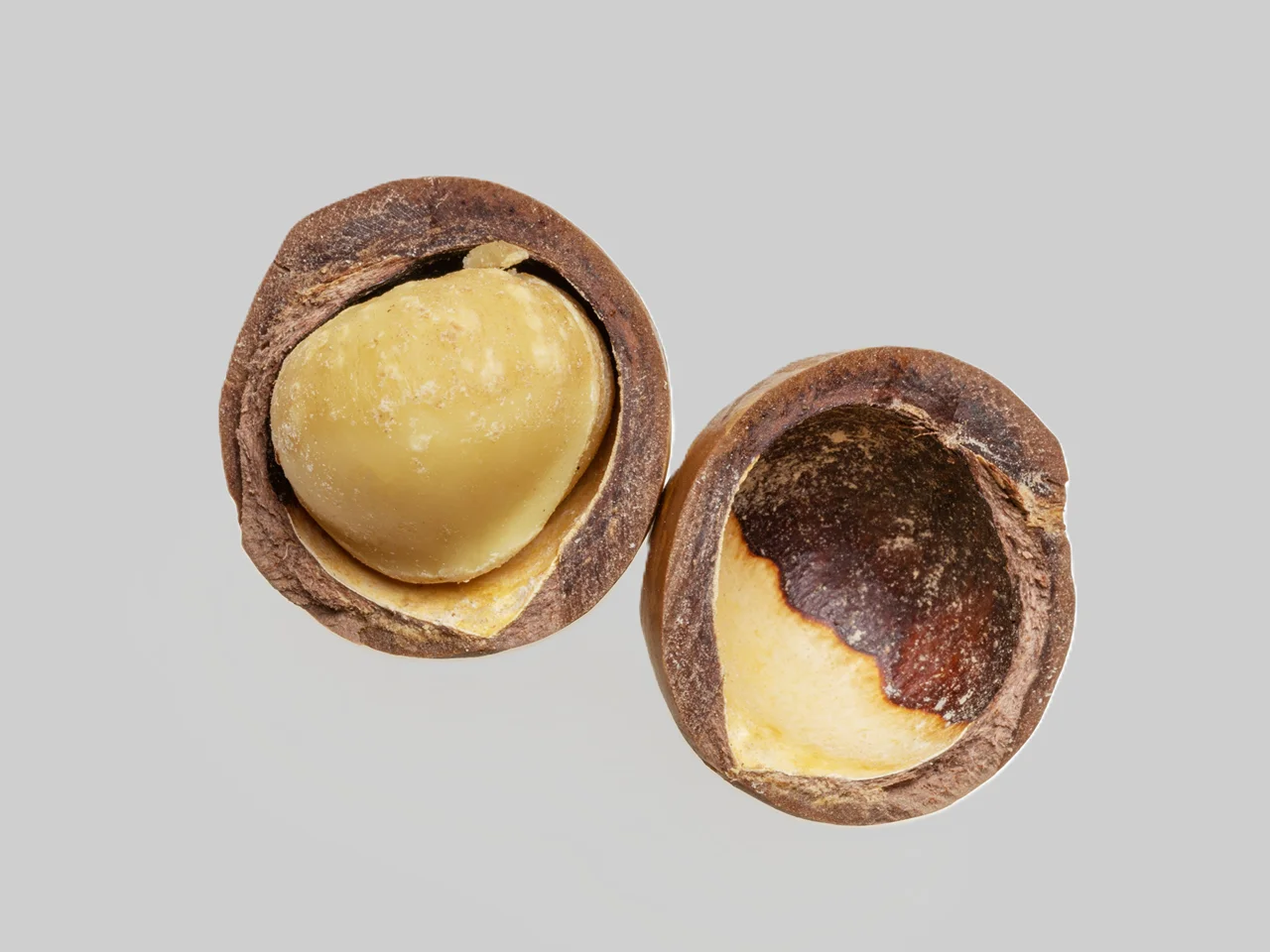
No — macadamia nuts are toxic to dogs, and even sharing a small handful can lead to serious illness. Whether you have raw, roasted, or salted nuts on hand, no form is considered safe for dogs. There is no preparation method that makes them less dangerous for dogs.
- Unlike some food hazards where the dose determines the danger, even a small amount of macadamia nuts can trigger noticeable and distressing reactions in dogs.
- Even one macadamia nut has been known to produce clinical signs in smaller dogs, making any exposure worth taking seriously.
- Macadamia nuts rank among the most well-documented food hazards for dogs. Though native to Australia, they are now widely consumed worldwide — and unfortunately, widely accessible to curious pets.
Risks of Macadamia Nuts in Dogs

Macadamia nut toxicity is a genuine concern in veterinary practice, and while researchers have studied it for years, the exact toxin responsible still isn't fully understood. What is known is that macadamia nut ingestion can affect multiple body systems at once.
- The toxic mechanism is still unclear: Despite years of study in toxicology, scientists have not yet identified the specific compound responsible for macadamia nut toxicosis in dogs. This makes prevention — rather than targeted treatment — all the more critical.
- The nervous system takes a hit: One of the most distinctive features of this condition is how it seems to affect the nervous system, causing symptoms like ataxia and muscle weakness that can leave dogs unable to move normally.
- Digestion is also affected: The digestive system does not escape either. Ingestion of macadamia nuts can disrupt normal gut function and, in some cases, may elevate lipase activity, raising the risk of pancreatitis — a painful and potentially serious inflammatory condition.
- Risk grows with quantity: While even a small amount is concerning, the severity of macadamia nut toxicity tends to increase with body weight relative to how much was consumed. Smaller dogs face a higher risk than larger breeds.
- Chocolate-covered nuts are doubly dangerous: If the macadamia nuts are coated in chocolate, the danger multiplies. Chocolate carries its own toxin for dogs, meaning dogs may face two serious threats at once from a single ingestion event.
Symptoms of Macadamia Nut Poisoning in Dogs

Knowing the clinical signs of macadamia nut poisoning early can make a real difference in your dog's outcome. Symptoms include a range of physical and neurological changes that typically appear within 12 hours of ingestion.
Weakness in the hind legs
One of the most telling signs of poisoning is weakness or paralysis of the hind legs. Dogs may struggle to stand, walk, or support their own weight on their back legs, and in more serious situations, this can progress to an inability to walk altogether.
Vomiting
Vomiting is a common sign following macadamia nut ingestion by dogs and is often one of the first symptoms pet owners notice.
Tremors or shaking
Visible shaking can occur as the nervous system responds to the toxin. This symptom can range from mild to severe and is a key indicator that veterinary care is needed right away.
Fever
Hyperthermia, or a high fever, is another recognized response. If your dog feels unusually warm to the touch or seems overheated, this may point to macadamia nut toxicity.
Lethargy
Lethargy — a marked drop in energy and responsiveness — is common and often accompanies the other clinical signs.
Loss of coordination
Ataxia, or loss of motor coordination, reflects how deeply the nervous system can be disrupted. Dogs may stumble, sway, or seem disoriented.
These signs of poisoning can appear within just a few hours and may worsen without treatment. Severe clinical signs may develop rapidly, so prompt action is important.
What to Do If Your Dog Ate Macadamia Nuts
If you suspect or know that your dog has eaten macadamia nuts, acting quickly is critical. Here's what you should do right away.
- Call your veterinarian immediately: The moment you realize your dog has had access to macadamia nuts, call your vet. Don't wait for symptoms to appear — early treatment can make all the difference in your dog's recovery.
- Note the amount consumed: Try to note how many nuts your dog ate and save any packaging. This will help your DVM figure out how much your pup has been exposed to and what they should do next.
- Never induce vomiting without advice: It may seem like a logical first step, but inducing vomiting at home without professional advice can sometimes lead to serious complications. Always allow your veterinarian to advise you before trying this method.
- Contact animal poison control if needed: If you can't reach your vet immediately, also call the Pet Poison Helpline or the Animal Poison Control Center. These services are staffed around the clock and can provide urgent guidance on macadamia nut ingestion.
- Monitor symptoms closely: While you arrange care, watch your dog carefully. Note any changes in behaviour, mobility, or physical condition, and report them when you speak with a veterinarian.
Diagnosis and Treatment of Macadamia Nut Poisoning in Dogs

When your dog arrives at a veterinary hospital, the veterinary team will move quickly to assess the situation. The diagnosis of macadamia nut poisoning is generally based on observed clinical signs and a history of macadamia nut ingestion rather than a specific lab test.
- No antidote available: At the moment, there is no antidote against macadamia nut toxicosis. The treatment of choice is supportive care to deal with the symptoms and help the body to get rid of the poison in time.
- Induced vomiting may be recommended early: If your dog is seen at a veterinary hospital within 12 hours of ingestion of macadamia nuts and has not yet shown severe symptoms, your veterinarian may induce vomiting to remove as much of the toxin as possible from the stomach.
- Activated charcoal can help limit absorption: Your vet may administer activated charcoal to help bind any remaining toxin in the digestive system, reducing how much the body absorbs. This is part of the specific treatment approach used in early-stage cases.
- IV fluids provide critical support: IV fluids can be considered as part of the supportive care for this poisoning. This method helps to improve the functioning of the organism and remove the toxic agent.
- Most dogs recover fully: The good news is that without treatment, symptoms tend to resolve on their own within 48 hours, but veterinary care can significantly speed up recovery and reduce suffering. With prompt and appropriate supportive treatment, the prognosis is generally very good.
Final Thoughts
Macadamia nuts may seem harmless, but these nuts can cause real harm to dogs at nearly any dose. As tempting as it might be to share a delightful treat, keeping macadamia nuts well out of reach is one of the simplest ways to protect your dog's health.
The good news is that most dogs recover well with prompt veterinary care and appropriate supportive treatment. If your dog does get into them, don't wait for symptoms to appear. Call your veterinarian right away for guidance, and remember that your vet is always the best resource when you're unsure whether a food is safe for dogs.
Frequently Asked Questions
Can dogs have macadamia nuts safely?
No — macadamia nuts should never be shared with dogs, regardless of the amount.
They are toxic in any form: Whether raw, roasted, or salted, no preparation method makes macadamia nuts safe for dogs to consume.
Even small quantities are dangerous: Unlike many food hazards where the dose determines the danger, even a single nut can produce clinical signs, especially in smaller breeds.
High fat content: Apart from the unknown toxin, the fat content in macadamia nuts can lead to digestive problems and pancreatitis.
Chocolate-coated nuts are doubly harmful: If macadamia nuts are covered with chocolate, the poisoning will be twice as bad because the dog will absorb two toxins.
No specific antidote exists: There is no antidote against this poisoning. The treatment is only symptomatic, so it is essential to prevent the condition.
What are the symptoms of macadamia nut poisoning in dogs?
Symptoms of macadamia nut poisoning can develop within hours and span both physical and neurological changes.
Weakness in the hind legs: Dogs may struggle to stand or walk, and in more serious cases, this weakness can progress to full inability to bear weight.
Vomiting:. It is commonly one of the earliest symptoms owners notice after their dog has ingested macadamia nuts.
Tremors and shaking: These can range from mild to severe and signal that the dog's neurological function is being disrupted by the toxin.
Fever and lethargy: Hyperthermia and a marked drop in energy are recognized responses that often develop alongside coordination problems.
Poisoning includes loss of motor coordination: Ataxia — stumbling, swaying, or appearing disoriented — reflects how deeply the nervous system can be affected.
What should I do if my dog ate macadamia nuts?
Acting fast is the most important thing you can do if your dog has been exposed to macadamia nuts.
Call your vet immediately: Do not wait for symptoms to appear — early intervention dramatically improves your dog's chances of a full recovery.
Note the quantity consumed: Estimating how many nuts were eaten and gathering any packaging helps your DVM assess exposure and plan an appropriate response.
Do not induce vomiting without guidance: Attempting this at home without professional direction can cause complications — always wait for your vet's instruction.
Contact animal poison control if you cannot reach your vet: Services like the Pet Poison Helpline are staffed around the clock and can provide urgent guidance in serious cases.
Monitor your dog closely: Track any changes in behaviour, mobility, or physical condition and report them to your veterinarian as soon as you speak with them.
Does macadamia nut toxicity require veterinary treatment?
Yes — while many dogs recover, cases that require veterinary attention should always be taken seriously and treated promptly.
Diagnosis is based on clinical signs and history: Because there is no specific lab test, vets rely on observed symptoms and confirmed or suspected ingestion to guide care.
Inducing vomiting may be recommended early: If a dog is seen within 12 hours of eating the nuts and before severe symptoms develop, a vet may recommend this as a first step.
Activated charcoal can limit toxin absorption: Administered as part of specific treatment in early-stage cases, it helps bind any remaining toxin in the digestive tract.
IV fluids are a cornerstone of supportive care: They will help to ensure proper hydration and organ function and enable the body to quickly eliminate the ingested toxin.
Most dogs recover fully with prompt care: Symptoms disappear in approximately 48 hours, and with the right supportive treatment, the prognosis is generally very good.
Should I see a vet if my dog ate macadamia nuts but seems fine?
Yes — even if your dog appears unaffected, contacting a vet right away is always the safest course of action.
Symptoms can take hours to surface: Clinical signs may not appear until up to 12 hours after ingestion, meaning a dog that seems perfectly normal could still develop serious symptoms later.
Previous tolerance does not guarantee future safety: The severity of toxicity depends on the ingestion dose relative to body mass, so a mild past reaction does not mean the next exposure will be the same.
The nervous system may be affected before outward signs show: Even without visible symptoms, the toxin could already be disrupting normal neurological function in ways that are not immediately obvious.
In rare cases, complications can develop quickly: While most dogs recover well, rare cases can escalate rapidly, particularly in smaller breeds or dogs with underlying health conditions.
Early intervention leads to better outcomes: Waiting for symptoms to worsen before seeking help costs valuable time — prompt action and supportive treatment significantly improve a dog's chances of a smooth and full recovery.

